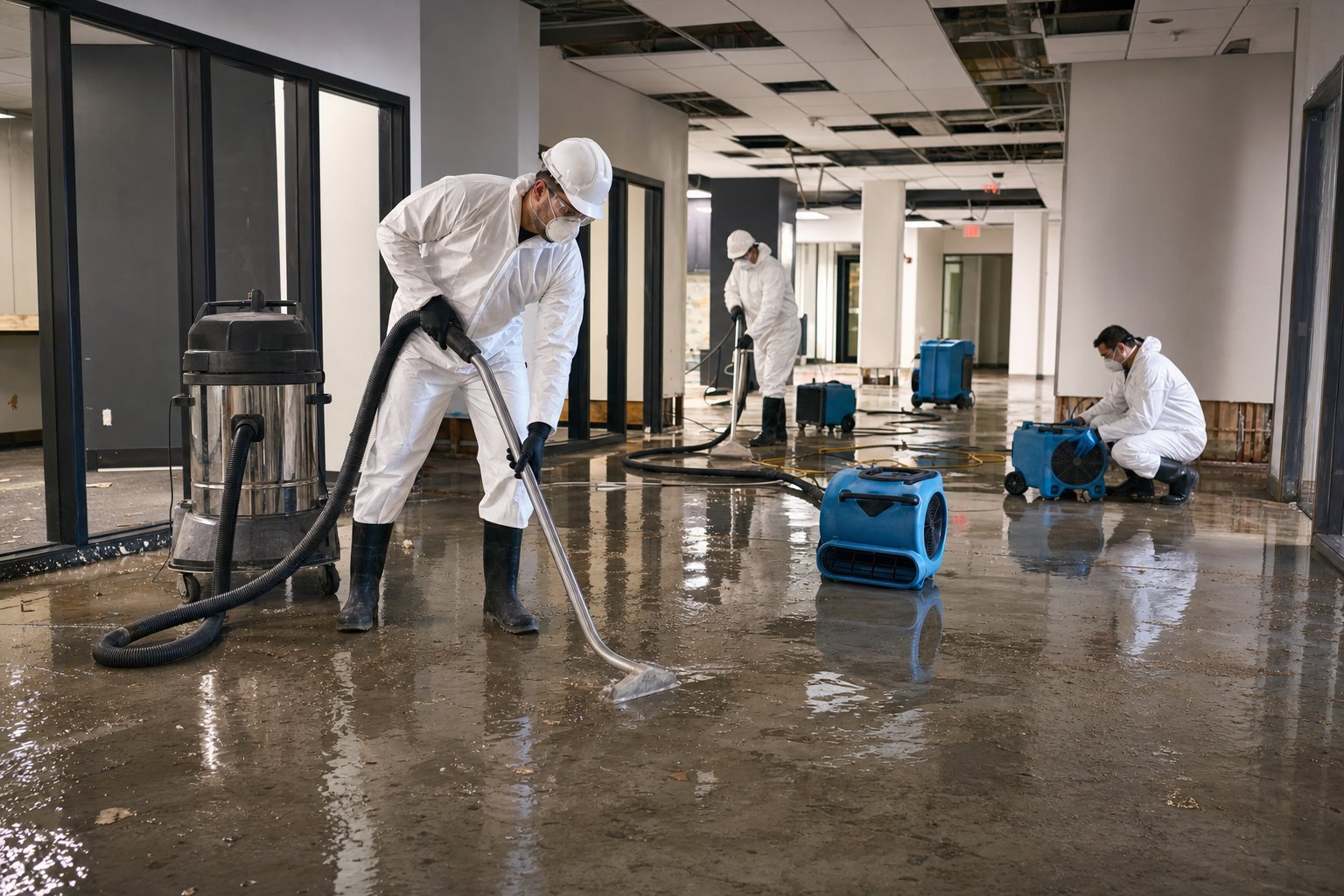
When a commercial facility has a water intrusion, sewage backup, or biohazard incident, the first 24 hours determine whether you reopen smoothly or face prolonged downtime and liability. GreenPoint Maintenance Services supports emergency response cleaning coordination for tri-state facilities with a focus on safety controls, documentation, and clear next steps. If you have an urgent situation in NYC, New Jersey, or Connecticut, call 844-814-0810 for rapid guidance and a walkthrough when feasible.
What counts as an emergency cleaning event (and why it matters)
Emergency cleaning is different from routine janitorial because the work may involve contamination, exposure risks, and regulated disposal. Common triggers include: burst pipes and flooding, HVAC condensate leaks, toilet overflows that spread beyond the restroom, sewage backups in basements, blood or bodily fluid incidents, and situations requiring containment. The risk is not only “it smells bad,” but also slip hazards, microbial amplification, and cross-contamination into occupied areas. GreenPoint helps clients triage events and coordinate the right response pathway so you do not under-respond or overpay for unnecessary steps.
In NYC buildings, emergencies often intersect with access constraints—freight elevator hours, security sign-in, and after-hours work rules. Rapid coordination is critical in high-density properties near transit hubs like Penn Station, Grand Central, and Atlantic Terminal because foot traffic makes contamination spread faster. For urgent guidance, call 844-814-0810.
The first 2 hours: containment and safety (do this before “cleaning”)
Before anyone starts wiping surfaces, stop the source if possible, isolate the affected area, and protect occupants and staff. Post signage, restrict access, and consider shutting down affected HVAC zones if contamination could aerosolize. Use appropriate PPE based on the hazard, and never mix chemicals in a panic response. OSHA-aligned hazard communication (SDS/GHS) is the baseline for chemical use and worker safety. GreenPoint’s approach emphasizes safety-first controls and documentation so the response is defensible if questions arise later.
If your team needs a clear chemical safety baseline, start here: [OSHA cleaning chemical safety (GHS/SDS)](/blog/osha-cleaning-chemical-safety-ghs-sds/). Then call 844-814-0810 to coordinate a walkthrough and response plan.
Water categories: clean water vs contaminated water
Not all water is equal. A supply-line leak in an office suite is different from a sewage backup in a basement. As contamination risk rises, so do containment requirements, PPE, disposal rules, and the need for specialty support. A buyer-friendly rule: if the water touched waste, drains, or unknown sources, treat it as contaminated until proven otherwise. GreenPoint helps clients determine whether routine cleaning is sufficient or whether a specialized restoration pathway is required.
Biohazard incidents: documentation and controlled cleanup
Biohazard incidents (blood, bodily fluids, sharps hazards) require controlled cleanup to reduce exposure. The goal is not just odor removal but risk reduction and safe re-occupancy. This includes: isolation of the area, correct PPE, controlled removal of contaminated porous materials where needed, and targeted disinfection with correct dwell times. GreenPoint can coordinate the appropriate protocol and ensure your facility has documentation of what was done, when, and by whom.
For many facilities, emergency response also exposes gaps in routine hygiene programs—especially in restrooms and high-touch corridors. After the incident is resolved, it is smart to reevaluate daily cleaning and verification. This reference helps set a baseline for high-traffic restrooms: [Restroom cleaning best practices (high traffic)](/blog/restroom-cleaning-best-practices-high-traffic/).
How GreenPoint uses verification (StockPoint) during emergency coordination
In urgent situations, stakeholders want proof: property management, tenants, and sometimes insurers. GreenPoint uses StockPoint to document work with timestamped GPS-tagged photos and organized reporting so you can show what was addressed and when. Verification reduces disputes and helps you communicate clearly with tenants and building leadership. When appropriate, we can add targeted ATP testing after cleanup to validate that priority touchpoints and surfaces are being maintained.
If your building leadership wants a more structured QA system after an incident, this reference is a good starting point: [Quality assurance commercial cleaning program](/blog/quality-assurance-commercial-cleaning-program/).
Reopening criteria: when is it safe to bring people back?
Reopening should be based on risk and documentation, not just “it looks dry.” At minimum, confirm: the source is stopped, affected areas are dry and free of slip hazards, contaminated materials are removed or controlled, and targeted disinfection has been completed with correct dwell times. For sensitive environments—schools, childcare, healthcare-adjacent spaces—reopening should also align to the facility’s policies and any applicable health department or organizational requirements. GreenPoint helps facilities translate the incident into a clear reopening checklist.
IICRC S500 Water Damage Categories: Why the Classification Matters
IICRC S500 is the industry standard for water damage restoration and defines three water categories that drive very different cleanup protocols. Category 1 (clean water) originates from a sanitary source: a broken supply line, an overflowing sink, or a rainwater intrusion. Category 2 (grey water) contains significant contamination that can cause discomfort or illness — dishwasher overflows, washing machine discharge, or aquarium leaks. Category 3 (black water) is grossly contaminated and can cause serious illness — sewage backups, floodwater, and any water sitting more than 72 hours (which reclassifies from Category 1 or 2 upward). GreenPoint Maintenance Services technicians are IICRC S500 certified and classify the water source within the first 30 minutes of arrival, because the wrong classification means the wrong cleaning chemistry, PPE, and disposal protocol. Call 844-814-0810 for emergency response any time day or night.
The First 24 Hours: A Minute-by-Minute Response Framework
Water damage becomes exponentially more expensive after the first 24 hours because mold begins colonizing damp surfaces within 24-48 hours per EPA guidance, and porous materials absorb standing water at accelerating rates. GreenPoint's emergency response framework: within 60 minutes of the initial call, dispatch two technicians with a wet vacuum, moisture meters, and initial-response PPE. Within 4 hours, complete water extraction, initial moisture readings, and containment of the affected area. Within 12 hours, install air movers and dehumidifiers sized to the affected square footage per IICRC calculations. Within 24 hours, deliver a written scope of work with drying timeline, projected cost, and salvageability assessment for affected materials. Facility managers who need to submit an insurance claim get all of this documentation packaged and ready to file.
Sewage Backup Protocols: The OSHA and CDC Framework
Sewage backups are always Category 3 water and require enhanced PPE (Tyvek coverall, N95 respirator or better, chemical-resistant gloves and boots), controlled containment (physical barriers, negative air pressure if possible), and disposal of all porous materials that contacted the water. Drywall must be cut back at least 12 inches above the wet line and disposed of; carpet and pad are unsalvageable; hard surfaces require detergent cleaning followed by EPA-registered disinfection. GreenPoint Maintenance Services follows the Restoration Industry Association Sewage Damage Guidance and documents every step in StockPoint for insurance and regulatory review. See our detailed guide on [ATP Bioluminescence Testing](/blog/what-is-atp-bioluminescence-testing-cleaning/) for verification that surfaces are actually clean after remediation.
Biohazard and Bloodborne Pathogen Cleanup Standards
Biohazard cleanup — blood spills, bodily fluids, needle stick sites, unattended death scenes — requires OSHA Bloodborne Pathogen certification (29 CFR 1910.1030), enhanced PPE, tuberculocidal disinfectants, and specialized waste disposal through a licensed medical waste hauler. GreenPoint maintains a certified biohazard response team available on call 24/7 across the tri-state area. Cleanup is fully documented with before-and-after photos, chemical use logs, and waste manifests. Facility managers dealing with an unexpected incident get discreet, professional response without the awkwardness of using regular office cleaning staff for a situation they aren't trained or emotionally prepared to handle.
Insurance Coordination and Documentation for Emergency Response
Insurance claim approval speed depends heavily on documentation quality. GreenPoint's standard emergency response package includes: timestamped GPS-tagged photos of every affected area, moisture readings at defined grid points, itemized scope of work with unit pricing, daily progress photos throughout the drying period, and a final completion certificate signed by the technician and facility contact. This package is delivered to the client and, upon written authorization, directly to their insurance adjuster. Adjusters routinely tell our clients they wish more restoration vendors documented at this level, because complete documentation reduces claim disputes and accelerates payment.
Building a Retainer Relationship Before You Need One
The worst time to shop for an emergency response vendor is at 2:00 AM with water pouring through the ceiling. Facility managers with established retainer relationships get guaranteed response windows (typically 60 minutes vs 3-6 hours for non-retainer clients), locked-in emergency pricing, and pre-authorized scope templates that eliminate approval delays. GreenPoint Maintenance Services offers emergency response retainers starting at $500 per year with no minimum call requirement, and existing GreenPoint janitorial clients receive priority response at no additional retainer cost. Call 844-814-0810 to add emergency response to an existing contract or establish a standalone retainer.
FAQ: emergency response commercial cleaning
Q: Should I evacuate the area during an incident? A: If there is contamination, strong odors, or slip hazards, isolate the area and restrict access until a safe plan is in place. Q: Can my janitorial crew handle sewage cleanup? A: Often, no. Sewage involves higher risk and may require specialized containment and disposal. GreenPoint can help coordinate the correct response pathway. Q: How fast can you respond? A: Response depends on location and access, but we aim to provide rapid guidance and schedule a walkthrough as quickly as feasible. Call 844-814-0810 to start triage. Q: What documentation should I keep? A: Photos, dates/times, scope of work, products used, and any disposal documentation. StockPoint reporting helps organize proof-of-service. Q: After cleanup, how do I prevent repeat incidents? A: Review root causes (plumbing, HVAC, tenant behavior) and strengthen routine cleaning and inspection programs for high-risk areas.
Urgent water, sewage, or biohazard situation in NYC, NJ, or CT? GreenPoint Maintenance Services provides emergency cleaning coordination with safety-first protocols and StockPoint documentation for clear proof-of-service. Call 844-814-0810 or email info@greenpointms.com to request rapid guidance and a walkthrough.