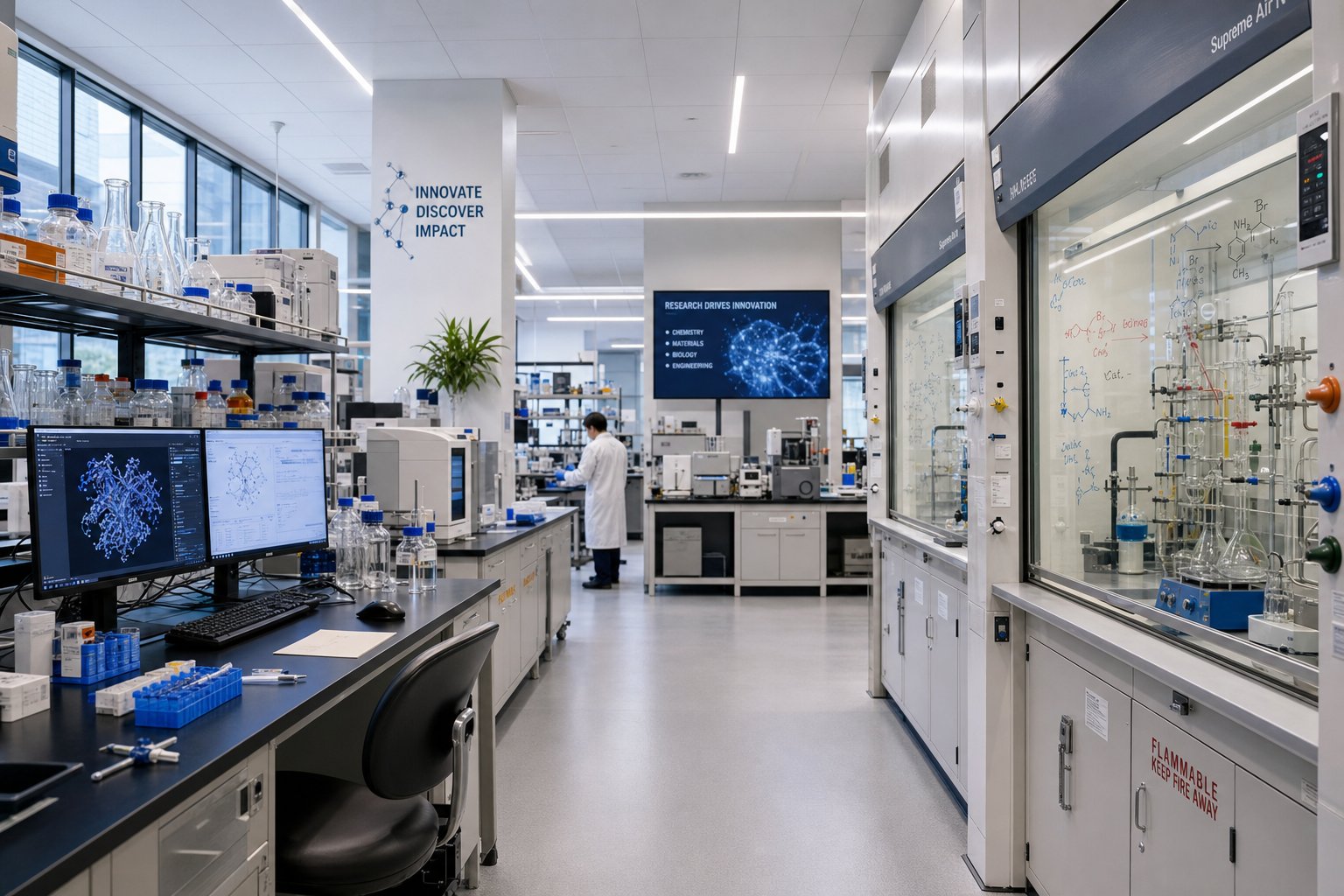
University labs are not “just another room” on a campus cleaning route. They combine chemical hygiene, biosafety considerations, and strict boundaries between research and custodial responsibilities. In NYC and the tri-state region, universities also operate under complex EHS programs and inspection expectations. GreenPoint Maintenance Services supports research environments by building lab-adjacent janitorial scopes that respect biosafety levels, coordinate with Environmental Health & Safety (EHS), and protect staff with OSHA-aligned training. To schedule a lab and corridor walkthrough, call 844-814-0810—GreenPoint will help you define exactly what gets cleaned, how often, and how it is verified.
Start with boundaries: what custodial teams clean (and what they do not)
The fastest way to avoid incidents is to define boundaries in writing. In most research settings, custodial teams should not handle open containers, lab glassware, pipettes, biological specimens, or chemical waste. Those are research responsibilities under the lab’s chemical hygiene plan and biosafety program. GreenPoint builds scopes that focus on floors, doors, entry touchpoints, trash removal where permitted, and restrooms and hallways adjacent to lab suites—plus offices and common areas inside research buildings.
We also recommend sign-off from EHS and lab leadership on: allowed products, permitted areas, PPE requirements, after-hours access rules, and emergency contacts. This is not “extra paperwork”—it is what prevents a routine cleaning task from becoming a compliance event. GreenPoint Maintenance Services documents these rules and trains teams accordingly, supported by fixed pricing so the program is predictable.
Biosafety levels (BSL) and cleaning: practical implications for janitorial planning
“BSL” labels are primarily about how research is conducted and controlled; they also influence what a cleaning vendor can do safely. In many campuses, BSL-1 spaces may allow broader custodial access, while BSL-2 spaces often require tighter access control and clearer separation between research cleaning and facility cleaning. GreenPoint’s approach is conservative: when in doubt, we keep custodial work at the perimeter (floors, doors, common areas) and coordinate with lab staff for interior bench areas.
For facilities managers, the takeaway is simple: do not assume one “lab cleaning” scope fits all. Map BSL-designated suites, identify shared corridors and anterooms, and confirm where custodial teams may enter. Call 844-814-0810 and GreenPoint will help translate your EHS constraints into a practical route plan that still delivers a clean, professional building.
OSHA fundamentals: hazard communication, SDS access, and chemical handling
Even when custodial staff are not cleaning lab benches, they are still exposed to risk in research buildings: chemical residues in common areas, broken glass in waste streams, and sharps risk in restrooms. GreenPoint aligns training to OSHA hazard communication practices: proper labeling, Safety Data Sheet (SDS) access, and clear rules for handling unknown spills. For chemical safety planning, our overview on [OSHA cleaning chemical safety and SDS/GHS](/blog/osha-cleaning-chemical-safety-ghs-sds/) is a useful reference for facility managers.
We also standardize dilution control and restrict “mixing” practices. In a campus environment where many departments share space, consistency matters: one improperly mixed product in a research building can create odor complaints, surface damage, or health concerns. GreenPoint Maintenance Services prefers documented products (including Green Seal options where appropriate) and trains teams to use them consistently.
Common areas inside research buildings: restrooms, classrooms, and conference rooms
Most research buildings include classrooms, seminar rooms, conference areas, and offices. These spaces behave like a mix of higher-ed and corporate facilities: whiteboard residue, food debris after meetings, and heavy restroom traffic around class changes. GreenPoint uses zone-based frequencies and a documented checklist so your building remains presentable for tours, grant-site visits, and prospective students. If you need a baseline reference for how often each space type should be serviced, see [cleaning frequency standards by facility type](/blog/cleaning-frequency-standards-by-facility-type/).
In NYC, compliance and visitor perception are inseparable: research sponsors and partners notice restrooms, elevators, and lobbies immediately. We design a daytime porter model when the building has long operating hours, and we track completion with StockPoint timestamped, GPS-tagged photos—useful when facilities teams manage multiple buildings across campus.
Cleaning verification in labs: documentation, inspections, and ATP testing
Evidence-based verification is how you earn stakeholder trust. GreenPoint supports a layered system: written scope, route logs, supervisor inspections, and photo proof through StockPoint. For locations that want measurable checks, ATP testing can be used in non-research touchpoints (door hardware, restroom dispensers, breakroom counters) to trend performance. Read [what ATP bioluminescence testing is](/blog/what-is-atp-bioluminescence-testing-cleaning/) to understand how it complements visual inspections.
Because labs have sensitive equipment, “more disinfectant” is not always better. We align product choice with EPA registration, contact time, and surface compatibility. If you are considering broader disinfection programs during outbreaks, use [scheduled disinfection vs routine cleaning](/blog/scheduled-disinfection-vs-cleaning-difference/) to frame the decision and avoid unnecessary disruption.
Local tri-state considerations: vendor access, security, and campus procurement
Tri-state campuses often have strict access control: key cards, sign-in, escort rules, and limited storage locations. GreenPoint works with your security team to define access windows and staging areas, reducing after-hours surprises. For public institutions, procurement requirements may include MWBE/MBE participation and documentation—GreenPoint Maintenance Services is MBE/MWBE certified (NYS and NYC) and SAM.gov registered, which simplifies vendor qualification for many schools and agencies.
If your buildings are in dense neighborhoods (e.g., Manhattan’s medical and academic corridors, Long Island City, Downtown Brooklyn, Newark, New Haven), loading dock and trash timing can become the hidden constraint. We plan routes around building access, elevator availability, and DSNY-style staging rules where applicable. To review your building’s constraints and receive a fixed-price proposal, call 844-814-0810.
FAQ: research university lab cleaning
Q: Can a janitorial team clean inside an active research lab? A: Sometimes, but only under written EHS-approved boundaries. In many programs, custodial work stays to floors, doors, and common areas while lab staff handle benches and equipment. Q: What PPE is required for lab-adjacent cleaning? A: It depends on the building’s hazard assessment; common requirements include gloves and eye protection, with additional controls in higher-risk suites. GreenPoint coordinates PPE rules with your EHS team. Q: Is ATP testing appropriate in research buildings? A: Yes for common touchpoints and restrooms; it is generally not used as a substitute for lab decontamination protocols inside controlled research areas. Q: How do we avoid chemical compatibility issues? A: Standardize products and dilution control, keep SDS accessible, and prohibit ad-hoc mixing—GreenPoint trains teams under OSHA-aligned hazard communication practices. Q: How do we start? A: Schedule a walkthrough at 844-814-0810; GreenPoint Maintenance Services will map zones, define boundaries, and deliver a fixed-price scope with verification.
Need a campus-ready janitorial scope for research buildings in NY/NJ/CT? GreenPoint Maintenance Services will define EHS-approved boundaries, train teams for OSHA-aligned chemical safety, and verify work with StockPoint timestamped, GPS-tagged photos. Call 844-814-0810 or email info@greenpointms.com to schedule a walkthrough and receive a written proposal with fixed monthly pricing.