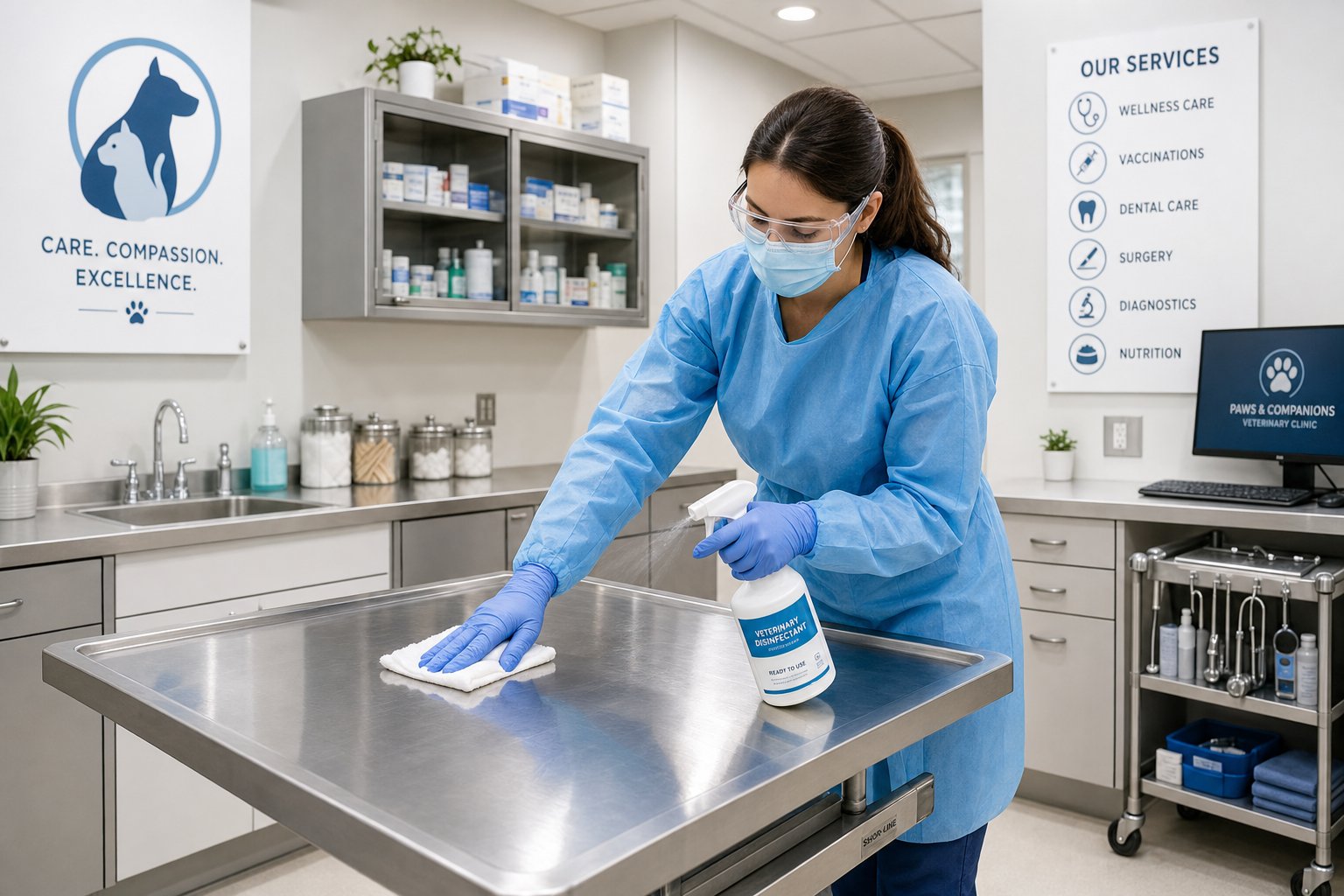
Veterinary clinics have a cleaning challenge most offices never face: multiple species, bodily fluids, and pathogens that can survive on surfaces—plus constant odor pressure. GreenPoint Maintenance Services supports veterinary practices in NYC and Long Island with a biosecurity-first cleaning program built around clear zoning, documented protocols, and proof of completion. To schedule a walkthrough and fixed-price quote, call 844-814-0810.
What makes veterinary clinic cleaning high-risk (and why "it looks clean" is not enough)
Veterinary environments combine medical-grade touchpoints with animal-related contamination. Exam rooms, treatment areas, and kennels can have blood, vomit, feces, urine, and dander—each with different cleaning requirements. Visual cleanliness does not tell you whether the right disinfectant was used with the right dwell time. GreenPoint focuses on process: correct products, correct contact time, and correct separation between zones.
Many NYC clinics are also space-constrained (narrow corridors, small utility closets, limited storage). That makes organization and tool control critical. GreenPoint uses color-coded microfiber systems and documented routing so staff do not carry kennel soils into reception. For a broader look at verification, see: [digital cleaning verification systems](/blog/digital-cleaning-verification-systems/).
Zoning your clinic: reception vs exam rooms vs kennels
The fastest way to reduce cross-contamination is to treat the clinic as zones with different tools and different chemicals. Reception and waiting areas need high-touch disinfection and glass/detailing for first impressions. Exam rooms and treatment areas need medical-grade disinfecting on tables, counters, and sink fixtures. Kennels and isolation require the strictest workflow, including dedicated tools and careful waste handling.
GreenPoint builds zone-based SOPs with labeled carts so the team can execute consistently during busy evenings. In NYC and Long Island, where clinics often run late hours, we schedule work to avoid patient flow and reduce stress for animals. If you want a walkthrough that maps your zones and traffic patterns, call 844-814-0810.
Disinfection details: dwell time, high-touch lists, and parvo-ready considerations
Disinfection is not a single spray-and-wipe step. It requires pre-cleaning (remove soils), then applying the correct disinfectant and allowing the labeled dwell time. In veterinary settings, clinics may require disinfectants effective against tough pathogens such as parvovirus, especially in isolation or kennel areas. GreenPoint follows manufacturer instructions and keeps SDS documentation available for safety and consistency.
We focus on high-touch lists that align with evidence-based infection control principles: door hardware, light switches, exam table adjustment points, faucet handles, keyboards at reception, and payment terminals. If you want a measurable approach, clinics can add spot ATP testing after cleaning on select surfaces; learn what ATP testing means in our guide: [what is ATP bioluminescence testing?](/blog/what-is-atp-bioluminescence-testing-cleaning/).
Odor control: prevention beats masking
Odor problems in animal hospitals usually come from hidden sources: porous flooring seams, grout lines, floor drains, trash staging, or kennel hardware that is not fully cleaned. GreenPoint prioritizes removal of the odor source (soil removal, degreasing, enzymatic cleaners where appropriate), then improves airflow and maintenance routines so odors do not return.
In older NYC buildings and many Long Island strip centers, HVAC and humidity swings can intensify odors. We coordinate with facility teams on filter changes and ensure vents and returns are kept clean at the edges. For indoor environmental context, see: [indoor air quality and commercial cleaning](/blog/indoor-air-quality-commercial-cleaning/).
Floors, walls, and cages: choosing methods that are safe for animals and staff
Veterinary floors take a beating: disinfectants, water, and traffic from staff moving quickly. GreenPoint selects methods by surface type—LVT, tile, epoxy, sealed concrete—so you get clean without damaging the finish. We also pay attention to splash zones on walls and kennel fronts, where contamination can accumulate and be missed in a "floor-only" approach.
When clinics have carpeted waiting areas, we usually recommend a controlled maintenance cycle (interim encapsulation plus periodic extraction) so odors and allergens do not build up. If you are comparing methods, use: [carpet extraction vs encapsulation for offices](/blog/carpet-extraction-vs-encapsulation-offices/). For a veterinary-specific floor-care plan, call 844-814-0810.
OSHA-aligned safety: bloodborne pathogen awareness and sharps handling
Even if your clinic is not a human hospital, it can involve blood and regulated medical waste. Cleaning teams should be trained on exposure awareness, PPE, and safe handling of waste containers. GreenPoint follows an OSHA-aligned approach for bloodborne pathogen safety and ensures crews understand what is off-limits (for example: never handling sharps outside approved containers).
If you want a checklist-level view of what training and documentation should look like, see: [OSHA bloodborne pathogen compliance for office cleaning crews](/blog/osha-bloodborne-pathogen-office-cleaning/). Then call 844-814-0810 to schedule a walkthrough that includes your waste flow and storage constraints.
Verification and reporting: how to prove clean to owners and managers
Veterinary practice owners often do not have time to "inspect" cleaning every morning—yet they are accountable for the environment. GreenPoint uses StockPoint verification to provide timestamped, GPS-tagged photos and task completion records, so you can confirm that exam rooms, restrooms, and kennel areas were completed as scheduled.
This proof-driven approach supports consistency across multi-location groups in NYC, Queens, Brooklyn, the Bronx, and Long Island (Nassau and Suffolk). It also reduces "he said / she said" conversations by replacing assumptions with documented work.
Local considerations in NYC and Long Island: space, foot traffic, and schedules
NYC clinics may be near transit hubs and high foot-traffic corridors, which increases soil load (street grit, salt, and moisture). Long Island clinics may have larger parking lots and more tracked-in debris during rainy weeks. GreenPoint adapts entry mat programs, vacuum frequency, and floor scrub schedules accordingly so reception stays clean even during peak appointment hours.
We also plan around your operating hours—late-night emergency care, early morning surgeries, and weekend rotations—so cleaning supports care rather than disrupting it. To start a veterinary clinic cleaning program with fixed pricing and measurable results, call 844-814-0810 or email info@greenpointms.com.
Need veterinary clinic cleaning in NYC or Long Island? Call GreenPoint Maintenance Services at 844-814-0810 for a walkthrough and fixed-price quote. With StockPoint verification (timestamped, GPS-tagged photos) and optional ATP testing, you get proof-driven biosecurity and odor control—not guesswork.