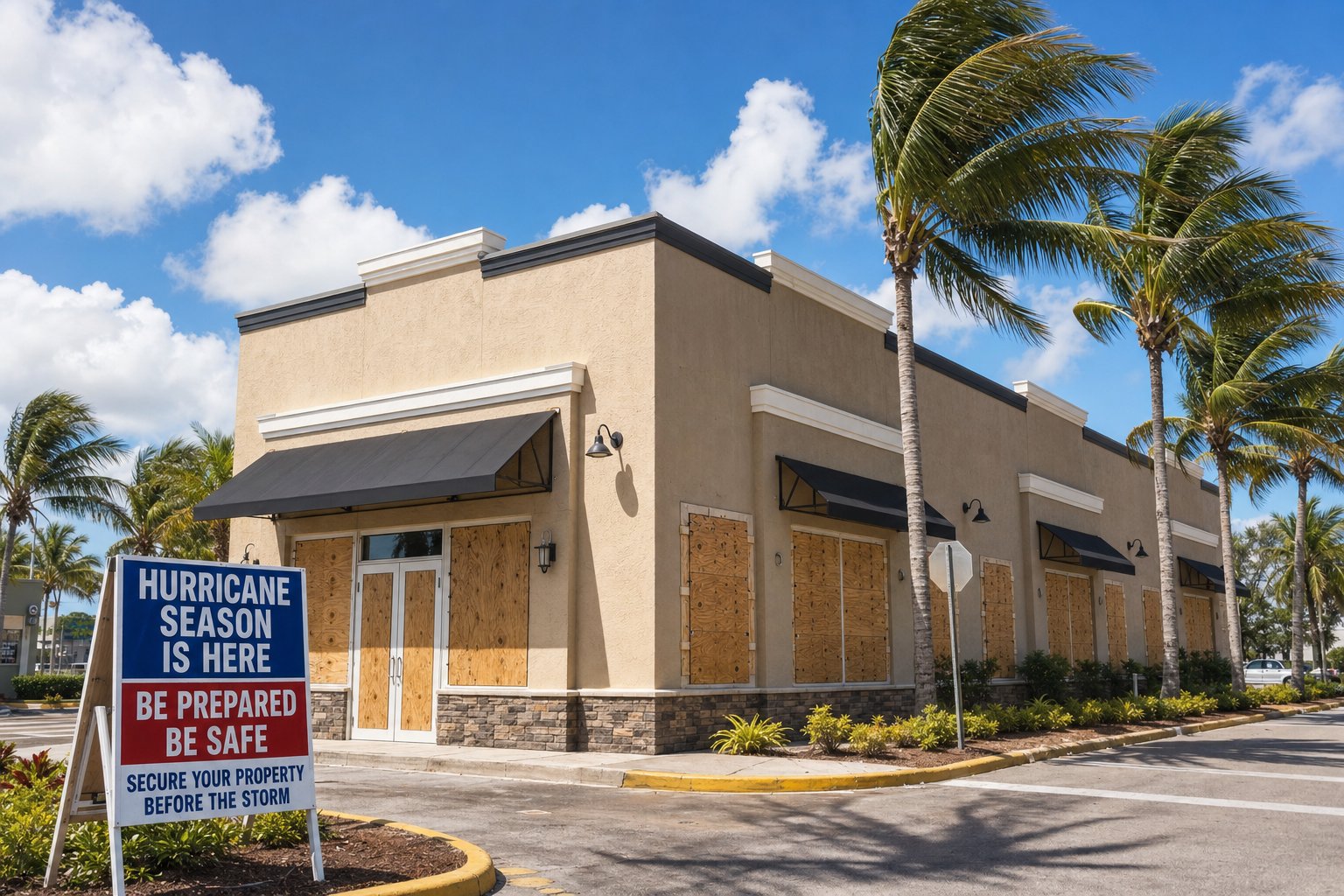
Hurricane season isn’t just about boarding windows—it’s about protecting facilities from contamination, moisture, and operational downtime. For multi-state operators with Florida locations, the cleaning plan should be integrated into your storm playbook: pre-storm sanitation to reduce odor and pest risk, post-storm debris and moisture controls to prevent mold, and documentation that supports insurance and property management decisions. GreenPoint Maintenance Services supports facilities in Florida as well as the NY/NJ/CT region, with fixed-price scopes, Green Seal-certified products where appropriate, and StockPoint verification (timestamped, GPS-tagged photos). To set up a hurricane-ready cleaning scope, call 844-814-0810.
Why cleaning is a hurricane preparedness task (not an afterthought)
Storms create a predictable chain of facility problems: power interruptions, HVAC downtime, humidity spikes, tracked-in debris, and water intrusion. Cleaning plays two roles: (1) reduce the baseline risk before the storm (trash rooms, drains, restrooms, break areas) and (2) execute a controlled recovery so moisture and contamination don’t become a long-term issue. GreenPoint Maintenance Services builds scopes that separate “pre-storm reset” from “post-storm recovery,” so teams aren’t improvising when time is tight.
For facility leaders, the biggest measurable outcome is speed: how fast can you return to safe occupancy? A planned cleaning scope, vendor contact list, and verification process can shave days off recovery for some buildings. If you want a walkthrough and a written hurricane-cleaning checklist tailored to your Florida site, call 844-814-0810.
Pre-storm cleaning: what to do 72–24 hours before landfall
Pre-storm cleaning is about removing what will rot, smell, or attract pests during closures. Focus on: trash removal (including exterior dumpster pad), breakroom refrigerators and food storage, restroom deep cleaning, and drain maintenance. In coastal or flood-prone zones, reduce porous materials on floors where possible (cardboard staging, textiles) and ensure floor areas are clear for rapid extraction if water gets in.
GreenPoint scopes a “pre-storm reset” that can be executed in a single shift: sanitize restrooms, empty and clean trash rooms, wipe down high-touch points, and document baseline condition with StockPoint photos so you can later distinguish storm damage from pre-existing issues.
Post-storm priorities: moisture, safety, and controlled re-entry
After a storm, your first question is safety: power, structural condition, and access. From a cleaning standpoint, the second question is moisture. In Florida, high humidity accelerates microbial growth when HVAC is down. The goal is to dry and clean fast: remove standing water, extract moisture from floors and carpets, and clean surfaces that were contacted by floodwater or debris.
GreenPoint’s post-storm scope prioritizes: debris removal (where permitted), wet vacuum/extraction, HEPA vacuuming once dry, and targeted cleaning/disinfection based on contamination risk. For guidance on selecting appropriate disinfectants and reading labels, see [EPA disinfectant registration guide](/blog/epa-disinfectant-registration-guide/).
Mold risk reduction: what facility managers should measure
Mold risk is driven by time and moisture. The practical facility metric is “hours to dry.” If porous materials (carpet, drywall, ceiling tiles) stay wet too long, risk rises. Cleaning teams support the process by removing wet debris, extracting water, and cleaning surfaces to reduce organic residue that feeds growth. For buildings with repeated humidity issues, a cleaning plan should align with HVAC maintenance and dehumidification capacity.
For occupied facilities returning quickly, HEPA filtration and microfiber dust capture reduce re-aerosolization. GreenPoint can integrate HEPA-based cleaning methods; see [HEPA filtration commercial cleaning](/blog/hepa-filtration-commercial-cleaning/) and [indoor air quality commercial cleaning](/blog/indoor-air-quality-commercial-cleaning/) for the IAQ rationale.
Insurance documentation: the “proof” most sites forget
Insurance and property management decisions depend on documentation: timestamps, photos, and a clear narrative of what was observed and what actions were taken. Many facilities capture a few phone pictures, but the set is incomplete or lacks time context. GreenPoint’s StockPoint verification can create structured photo logs (timestamped and GPS-tagged) for key zones: lobby, electrical rooms (exterior view), restrooms, breakrooms, docks, and affected tenant areas.
We recommend a simple documentation cadence: baseline photos pre-storm, immediate post-storm condition photos, and completion photos after cleaning and drying tasks. This supports internal reporting and third-party adjuster conversations. If you’re building a broader emergency plan, our article on [hurricane preparedness for Florida commercial facilities](/blog/hurricane-preparedness-florida-commercial-facilities/) provides a complementary facility checklist.
Coordinating vendors: janitorial, restoration, security, and property management
Post-storm recovery often fails due to poor vendor coordination: restoration teams need clear access, security controls must be updated for temporary crews, and property management wants daily status updates. GreenPoint integrates into vendor stacks by defining boundaries: janitorial handles sanitation and routine cleaning tasks; restoration handles structural drying and specialized remediation; security manages access. We keep supervisors accountable through digital checklists and StockPoint reporting that can be shared with stakeholders.
Fixed pricing vs hourly: why scope clarity matters during storm season
During storms, hourly billing can become unpredictable, especially when access windows shift. GreenPoint Maintenance Services prefers fixed scope-based pricing for pre-storm preparedness tasks and clearly defined post-storm response tiers. That means you know what you’re buying (and what is excluded) before the event. For budgeting concepts, see [calculating true cleaning cost (TCO)](/blog/calculating-true-cleaning-cost-tco/) and [commercial cleaning contract key terms](/blog/commercial-cleaning-contract-key-terms/).
Pre-season inventory: what to stockpile in June before the first named storm
Florida hurricane season officially runs June 1 through November 30, and the operational reality is that supply chains for cleaning and remediation equipment tighten dramatically once a named storm enters the Gulf. GreenPoint Maintenance Services builds pre-season inventory checklists with every Florida client, typically stockpiling at each site: 40 to 80 hours of extraction-vacuum runtime capacity (either owned or on standing rental hold), 200 to 400 pounds of absorbent granular for chemical or fuel spills, at least 6 to 12 industrial-grade air movers, and 2 to 4 dehumidifiers sized for the largest interior space in the building.
This inventory is documented in StockPoint with photos taken during our June walkthrough, giving facility managers a defensible record for insurance-loss claims if the pre-storm inventory is later damaged. Call GreenPoint at 844-814-0810 to schedule a June pre-season walkthrough and inventory audit for any Florida commercial property.
Boarding, sandbagging, and cleaning coordination in the 72 hours before landfall
Once the National Hurricane Center issues a Cone of Uncertainty that includes a property, the 72-hour window becomes intensely scheduled: boarding contractors, sandbag delivery, IT shutdown teams, and janitorial secure-and-clean crews all need site access within overlapping windows. GreenPoint's storm-prep protocol includes a final deep clean 48 to 72 hours before projected landfall — not for cosmetic reasons but because pre-existing dust, grease, and biological load significantly worsen post-storm mold growth when combined with humidity intrusion. A clean pre-storm surface takes days longer to develop visible mold than a soiled surface at the same moisture level.
We also coordinate with the boarding contractor to identify which windows and doors will remain accessible for post-storm crew entry, and we document the entire building interior with dated photos as a baseline for any subsequent insurance claim. That photo baseline has repeatedly been the difference between a straightforward claim and a months-long dispute in the [hurricane insurance workflow](/blog/hurricane-preparedness-florida-commercial-facilities/) that Florida operators know well.
Post-storm cleaning sequencing: safety, water, mold, then finishes
The single most common post-storm mistake we see is crews jumping to visible cleanup (broken glass, debris) before addressing invisible priorities (moisture, contamination, electrical). GreenPoint's post-storm sequence is: (1) safety walk with photos, focused on electrical, structural, and biological hazards; (2) standing-water extraction within the first 24 to 48 hours to stay ahead of mold; (3) antimicrobial treatment on all affected porous surfaces; (4) dehumidification to below 50% relative humidity for at least 72 hours; (5) only then, cosmetic cleaning and finish restoration.
For commercial buildings with medical, food service, or childcare tenants, an additional ATP swab-testing step is added before restoring tenant operations. This provides objective evidence that the space is not just visually clean but microbially acceptable for regulated use. GreenPoint Maintenance Services provides ATP testing on all Florida post-storm scopes at no additional charge, which has been a key reason clients renew year over year.
Insurance documentation, contents inventory, and the paperwork nobody thinks about until they need it
The single largest driver of hurricane-related insurance disputes in commercial real estate is not the damage itself but the documentation of pre-storm and post-storm condition. GreenPoint delivers a fully packaged Insurance Documentation Report to every Florida client after any named-storm event: dated photos of every affected area, chemical logs showing exactly what antimicrobials were applied where, dehumidifier and air-mover runtime logs, and a written narrative of the sequencing decisions our team made. Insurance adjusters have repeatedly told our clients that this level of documentation moved their claim from 'under review' to 'approved' in a fraction of the normal cycle.
FAQ: hurricane season facility cleaning prep
Q: When should we schedule a pre-storm cleaning reset? A: Ideally 72–24 hours before projected landfall, after you’ve confirmed closure plans, so trash removal and restroom sanitation are fresh and documented. Q: What’s the first cleaning priority after a storm? A: Moisture control—remove standing water and begin drying/extraction, then clean and disinfect based on contamination risk. Q: How do we document condition for insurance? A: Use time-stamped photo sets before and after, plus notes on observed water intrusion and completed actions; structured logs like StockPoint reduce gaps. Q: Can you support multi-site operators with Florida and NYC assets? A: Yes—GreenPoint supports regional portfolios and can standardize checklists, verification, and reporting across sites. Q: Do green products work after storms? A: Many Green Seal-certified cleaners perform well for routine cleaning; disinfectants must be EPA-registered and used per label for the specific application.
If you manage Florida facilities and need a hurricane-ready cleaning plan with audit-ready documentation, GreenPoint Maintenance Services can help. We provide fixed-price preparedness scopes, post-storm response tiers, and StockPoint verification (timestamped, GPS-tagged photos). Call 844-814-0810 or email info@greenpointms.com to schedule a walkthrough and set your site up before the next storm track.