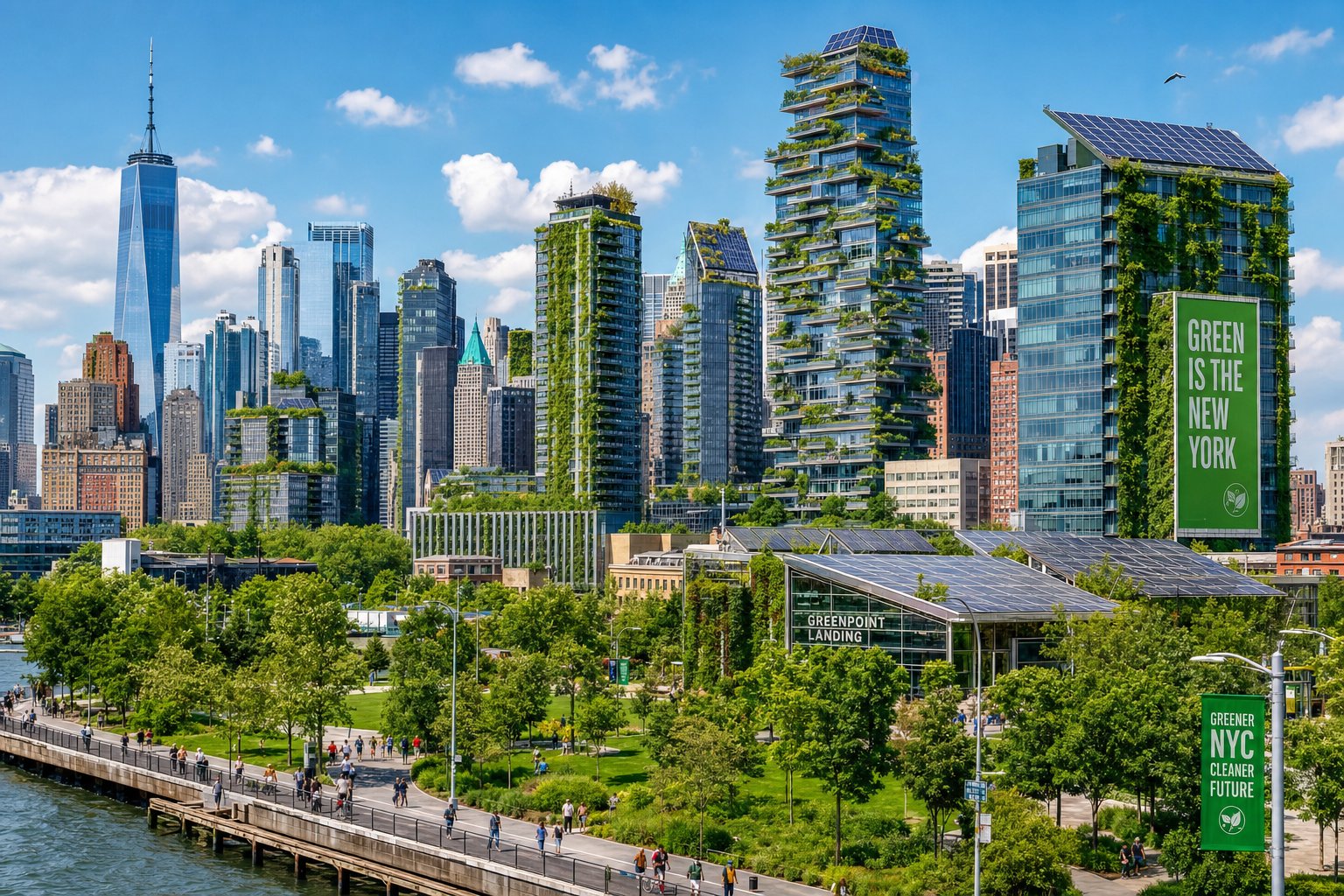
Local Law 97 has moved from “future policy” to an operating constraint for NYC building owners—especially in Class A towers, large multifamily portfolios, and institutions. While cleaning is not the biggest line item in carbon accounting, the cleaning spec affects chemical selection, waste streams, indoor air quality, and tenant satisfaction—areas that increasingly show up in ESG reporting and lease negotiations. GreenPoint Maintenance Services helps NYC and tri-state facilities align cleaning programs with measurable outcomes: Green Seal-certified products where appropriate, fixed pricing (no hourly billing), and StockPoint verification (timestamped, GPS-tagged photos and live dashboards). For a Local Law 97-aligned cleaning walkthrough, call 844-814-0810.
Why building managers are rewriting cleaning specs in 2026
In 2026, the pressure is multi-directional: owners face emissions limits and potential penalties, tenants ask for healthier spaces, and lenders/insurers scrutinize operational controls. Cleaning sits at the intersection of occupant experience and building operations. The wrong products can contribute to odor complaints and perceived “chemical” air, while the wrong processes can increase water use, damage finishes, and shorten asset life—creating replacement emissions and cost.
GreenPoint Maintenance Services treats the cleaning program as a facility system: define outcomes (appearance levels, IAQ expectations, restroom standards), then choose methods that hit those outcomes with minimal waste. For standards thinking, our post on [cleaning frequency standards by facility type](/blog/cleaning-frequency-standards-by-facility-type/) is a good starting point.
Local Law 97, tenant ESG, and the operational documentation gap
One of the biggest problems in ESG operations is documentation: teams do good work but can’t prove it consistently. Tenants and ownership teams want evidence that the building is managed systematically. GreenPoint’s StockPoint verification provides timestamped, GPS-tagged photos and digital checklists for key zones (lobbies, restrooms, high-touch points, waste rooms), which can support internal reporting and vendor management.
This is also where fixed pricing matters. If the vendor is paid by the hour, “doing more” becomes “charging more.” Under a fixed scope, the vendor is paid to maintain condition. GreenPoint offers fixed, scope-based pricing with no hidden fees; schedule a walkthrough at 844-814-0810 and we’ll build a Local Law 97-conscious cleaning scope tailored to your building.
Product selection: Green Seal, safer chemistry, and when “green” is a performance upgrade
A modern “green” program is not about weak products—it’s about safer chemistry that still performs. GreenPoint uses Green Seal-certified products where appropriate and trains crews on correct dilution to avoid waste and residue. In many buildings, right-sizing chemistry reduces rework: fewer streaks on glass, fewer film build-ups on floors, and fewer odor complaints after disinfectant use.
Disinfection still has a place (restrooms, high-touch points, outbreak response), but in routine operations the goal is cleanliness with minimal unnecessary chemical load. If you’re aligning product procurement with compliance and risk management, see our guide on [EPA disinfectant registration](/blog/epa-disinfectant-registration-guide/) to ensure label claims match your use case.
Energy, water, and floor care: hidden impacts building teams overlook
Floor care is often the largest “process” footprint in janitorial operations: auto-scrubbers, burnishers, extraction, and periodic strip-and-wax consume electricity and water. Optimizing floor care can reduce both cost and disruption. For example, improving entryway matting and salt management can reduce the frequency of restorative floor work. If you manage resilient flooring, our technical guide on [VCT strip, seal, and wax](/blog/vct-floor-care-strip-seal-wax-guide/) explains how to maintain gloss without over-stripping.
GreenPoint scopes floor care by traffic and soil type instead of “one schedule for the whole building.” In Midtown and Downtown Manhattan towers, we often segment lobby stone, elevator lobbies, tenant corridors, and service corridors into different standards and frequencies—saving labor and reducing machine hours.
Indoor air quality (IAQ): why cleaning changes how a building feels
Local Law 97 conversations often include ventilation upgrades, but cleaning also affects IAQ: dust load, filter burden, and occupant comfort. Better dust control with HEPA filtration reduces re-suspension, especially in high-traffic lobbies and open office floors. GreenPoint uses HEPA vacuums where appropriate and emphasizes microfiber systems that capture soil rather than push it around.
If you want to connect IAQ to cleaning KPIs, see our explainer on [indoor air quality and commercial cleaning](/blog/indoor-air-quality-commercial-cleaning/) and our practical guide to [HEPA filtration commercial cleaning](/blog/hepa-filtration-commercial-cleaning/). Building managers who can show an evidence-based approach often win tenant confidence faster.
Waste diversion and consumables: restrooms, paper, and the procurement lever
Restroom supplies are a daily touchpoint for tenants and a measurable waste stream. Standardizing dispensers, controlling usage, and choosing recycled-content paper can support sustainability goals while improving user experience. GreenPoint can help implement a consumables plan tied to occupancy and event schedules—especially in buildings with shared conference centers or amenity floors.
The key is measurement: inventory turnover, complaint rate, and refill labor. GreenPoint’s reporting can help facilities connect supply usage to actual occupancy patterns. If you’re rewriting vendor requirements, also review [how to choose a commercial cleaning company](/blog/how-to-choose-commercial-cleaning-company/) for contract terms that protect you from “low bid, high change order” outcomes.
How to build a Local Law 97-aligned cleaning RFP (what to ask vendors)
If you’re issuing an RFP in 2026, include questions that force operational clarity: What products are Green Seal-certified? How are dilutions controlled? What is the verification method (photos, inspections, ATP testing where relevant)? What training is documented? Is pricing fixed by scope or hourly? GreenPoint Maintenance Services is MBE/MWBE-certified (NYS, NYC, and NYC DOE), SAM.gov registered, and supports enterprise procurement requirements for multi-site portfolios.
For contract language and risk controls, our overview on [commercial cleaning contract key terms](/blog/commercial-cleaning-contract-key-terms/) can help you structure performance expectations and avoid surprises. To discuss a Local Law 97-conscious janitorial program for your NYC building, call 844-814-0810.
Chemical selection and Scope 3 emissions: the sourcing question LL97 forces
Local Law 97 currently regulates on-site Scope 1 and utility Scope 2 emissions, but the 2030 compliance period brings much stricter caps that push building owners toward every available reduction. Cleaning chemicals are a Scope 3 category — embedded in the emissions of manufacturing and shipping the products your building uses each year — and while they are not directly regulated today, several NYC portfolios are already tracking them because reporting frameworks like GRESB and LEED O+M count them. GreenPoint Maintenance Services has standardized on Green Seal and EcoLogo certified concentrates that ship as small volumes (typical dilution: 1 gallon of concentrate makes 128 gallons of use-solution), cutting shipping-related carbon by 60 to 80% versus ready-to-use ('RTU') competitors.
Building owners tracking Scope 3 for voluntary disclosure programs can request our full chemical inventory with SDS documents and Green Seal certification numbers as part of their annual [sustainability reporting](/blog/green-cleaning-commercial-buildings-guide/) workflow. This documentation is included in every GreenPoint contract at no additional cost — call 844-814-0810 to request a sample sustainability packet.
Cleaning equipment electrification: from propane burnishers to battery robots
The invisible LL97 driver most building managers overlook is the propane-burnisher fleet used to polish VCT floors in Class A lobbies and corridors. Each propane burnisher generates roughly 4 to 6 lbs of CO2 per operating hour of on-site combustion, plus indoor air-quality concerns from combustion byproducts. GreenPoint has migrated its NYC fleet to battery-electric burnishers and battery-powered scrubbers with rated runtimes of 3 to 6 hours per charge, eliminating that Scope 1 emissions category entirely from cleaning operations.
For buildings tracking their tenant-space cleaning emissions (which show up under the master emissions cap even when a landlord contracts them out), specifying battery equipment in the janitorial RFP is one of the lowest-cost carbon reductions available. GreenPoint provides written equipment inventories as an appendix to every proposal, so buildings can document the reduction for their LL97 disclosure. As a bonus, tenants routinely comment on the reduced noise and eliminated propane smell during business hours.
Waste stream, recycling, and LL97-adjacent NYC compliance
NYC Local Law 87 (energy audits) and Local Law 33 (energy grades displayed at entrances) create a documentation environment where property managers are audited for many facility disclosures at once. Cleaning-adjacent programs — most notably NYC's commercial organics recycling requirements under Local Law 146 and its expansions — often become the responsibility of the janitorial contractor because we handle the bags, bins, and dock coordination. GreenPoint Maintenance Services offers waste-stream setup and training as part of any full building contract, including labeling, staff education, and monthly diversion-rate reporting.
For buildings pursuing LEED O+M or Fitwel recertification alongside LL97, this integrated waste-and-cleaning approach reduces vendor coordination overhead and prevents the finger-pointing that happens when the cleaner and the waste hauler each blame the other for a mislabeled bin or a missed pickup.
How to write the LL97 language into your next cleaning RFP
The single most effective step a facility manager can take in 2026 is to update the specification section of the cleaning RFP with three clauses: (1) all chemicals must carry Green Seal, EcoLogo, or EPA Safer Choice certification; (2) all floor equipment used more than 4 hours per week must be battery-electric or corded electric (no combustion); (3) the vendor must provide quarterly documentation of chemical volumes, equipment inventory, and any transportation-related fuel used for on-site work. GreenPoint has written these clauses into more than 40 tri-state cleaning proposals in the last year and can share a template on request. This is exactly the kind of preparation that turns LL97 from a compliance headache into a differentiator when your building courts tenants who care about ESG.
FAQ: Local Law 97 and cleaning
Q: Does switching to “green” cleaning make a measurable difference? A: It can—especially in IAQ perception, odor complaints, and reduced residue/rework; the biggest gains come from correct dilution and process control, not marketing labels. Q: Is cleaning part of Local Law 97 compliance? A: Cleaning isn’t the primary driver of building emissions, but it influences tenant experience, waste, and operational practices that show up in ESG and operations reporting. Q: How can we document janitorial performance for stakeholders? A: Use digital verification like time-stamped photo logs, inspection scoring, and corrective action tracking—GreenPoint uses StockPoint for this purpose. Q: What should we require in a 2026 cleaning RFP? A: Fixed-scope pricing, Green Seal-certified products where appropriate, SDS availability, a QA plan, and clear KPIs tied to appearance levels and tenant satisfaction. Q: Do you cover buildings outside Manhattan? A: Yes—GreenPoint covers all NYC boroughs plus Westchester, Long Island, NJ, and CT for regional portfolios.
Updating your cleaning spec for 2026? GreenPoint Maintenance Services can align your program with tenant expectations, Green Seal-certified products, and audit-ready StockPoint verification (timestamped, GPS-tagged photos). Call 844-814-0810 or email info@greenpointms.com to schedule a walkthrough and receive a fixed-price proposal for your NYC building.