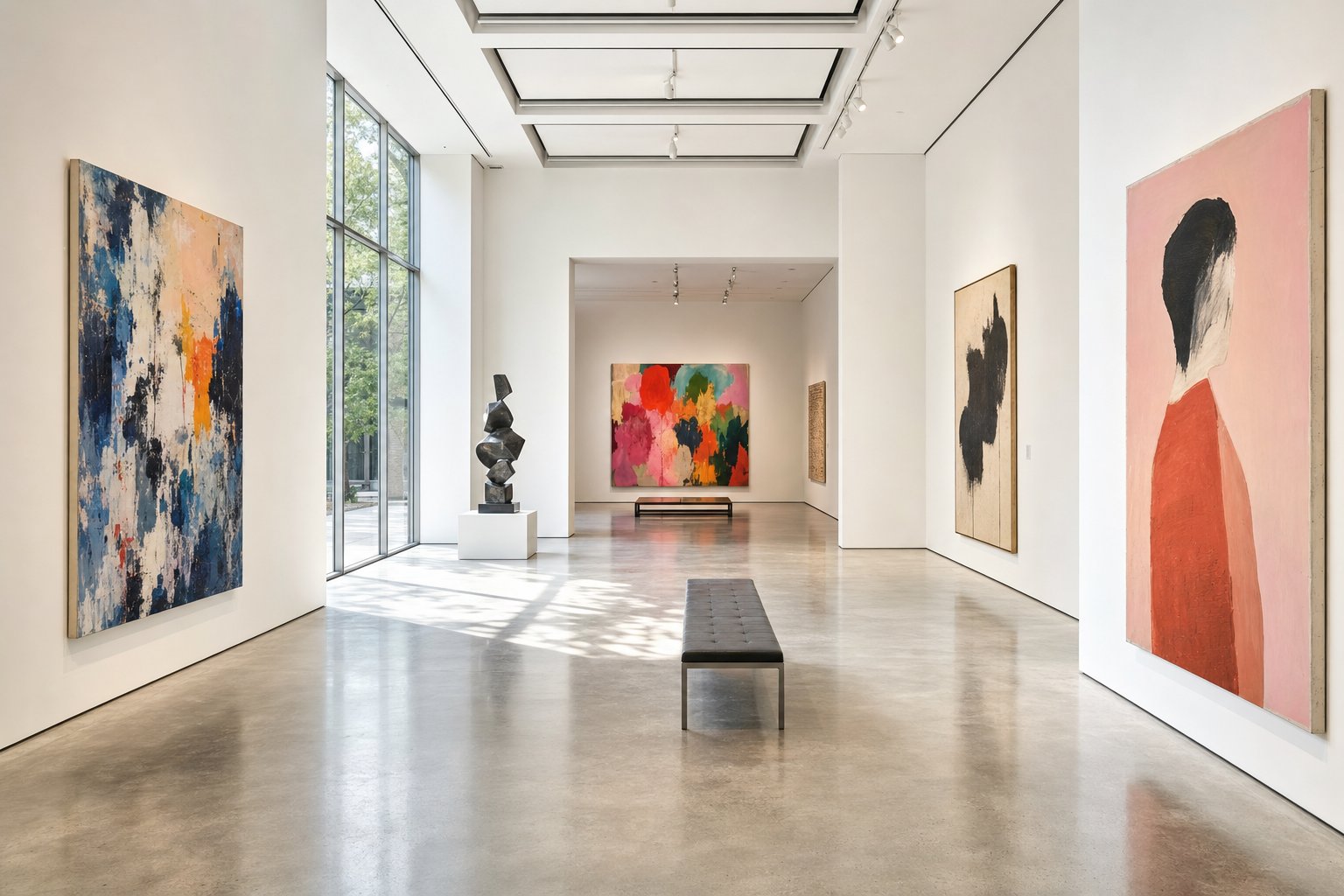
Museum and gallery cleaning is a discipline of control. The goal is not only "clean"—it’s clean without introducing dust plumes, residues, vibration risk, or chemical off-gassing near collections. In NYC and across the tri-state, museums also face heavy visitor traffic, winter salt tracked in from sidewalks, and tight coordination with security and facilities teams. GreenPoint Maintenance Services designs artifact-adjacent cleaning protocols with conservative chemistry, HEPA filtration practices, and verification through StockPoint (timestamped, GPS-tagged photos and checklists). Call 844-814-0810 to schedule a walkthrough for your museum, gallery, or cultural institution.
Why galleries require a different cleaning mindset
In a typical office, appearance is the primary outcome. In a museum, the outcome includes preservation risk management: dust, humidity, and surface residues can affect display cases, frames, and visitor-facing surfaces. Cleaning teams must avoid aerosolizing dust near open exhibits and must never use strong fragrances or harsh chemicals that could off-gas. GreenPoint trains teams on conservative methods: microfiber dusting with minimal agitation, controlled vacuuming with HEPA filtration, and strict tool separation to prevent cross-contamination.
Artifact-adjacent zones: defining boundaries and handling rules
The first step is mapping where janitorial work ends and collections care begins. GreenPoint works with museum leadership to define artifact-adjacent zones: galleries, display-case exteriors, stanchions, benches, and visitor rails. We document "do not touch" surfaces and identify any areas requiring a curator or facilities escort. This prevents well-intentioned mistakes like polishing a case with the wrong product or moving barriers. If your facility has strict security requirements, our public-building processes in [courthouse and government office cleaning](/blog/courthouse-government-office-cleaning-security/) may also be relevant.
Dust control: HEPA filtration and low-turbulence techniques
Dust is the primary enemy in many cultural institutions. Standard vacuuming can re-distribute fine particulate, especially on hard floors and near HVAC returns. GreenPoint uses HEPA-filtered vacuums where appropriate and emphasizes low-turbulence cleaning: slow passes, edge control along baseboards, and avoiding aggressive shaking of mats. For facilities prioritizing air quality, see our primer on [HEPA filtration in commercial cleaning](/blog/hepa-filtration-commercial-cleaning/) and [indoor air quality and commercial cleaning](/blog/indoor-air-quality-commercial-cleaning/).
Chemistry selection: low residue, low odor, and surface compatibility
Many galleries have sensitive finishes: polished stone, sealed wood, specialty coatings, and acrylic surfaces on cases. The wrong cleaner can leave haze, streaking, or residues that attract more dust. GreenPoint selects products based on surface compatibility and uses controlled dilution to avoid over-application. Where green product requirements exist, we can use Green Seal certified options and maintain performance by matching chemistry to the soil type. If your team is building a formal green program, our guide on [green cleaning for commercial buildings](/blog/green-cleaning-commercial-buildings-guide/) is a useful reference.
HVAC coordination: timing, humidity, and after-hours cleaning
Museums often run tight environmental controls for temperature and humidity. Cleaning can affect those controls indirectly: propping doors, changing airflow patterns, or introducing moisture through wet mopping. GreenPoint coordinates cleaning windows with facilities teams so work happens in stable conditions and heavy wet work is scheduled appropriately. We also align with security protocols for after-hours access—particularly in Manhattan and Brooklyn locations with late-night events or rotating exhibits. Call 844-814-0810 to coordinate a walkthrough with your facilities manager.
Floor care for museums: appearance standards without aggressive stripping
High-visibility floors are often the first thing visitors notice—especially in lobbies and gallery corridors. But aggressive floor stripping can create odors, require ventilation changes, and increase slip risk during events. GreenPoint favors a planned maintenance approach: frequent dust-mop/vacuuming, periodic scrub-and-recoat, and targeted detailing at entrances where winter salt and street grime are worst. If you manage VCT in back-of-house or office areas, see [VCT floor care strip and wax guide](/blog/vct-floor-care-strip-seal-wax-guide/).
Restrooms and café areas: protecting the visitor experience
Even the best exhibit can be undercut by poor restroom conditions. Museums and galleries often need public restroom standards closer to hospitality: odor control, fixture detailing, and frequent replenishment. Café and break areas require food-safe practices and careful trash management. GreenPoint can provide day porter support for peak hours and verify completion with StockPoint photos. For technique standards, reference [restroom cleaning best practices for high traffic](/blog/restroom-cleaning-best-practices-high-traffic/) and [cleaning frequency standards by facility type](/blog/cleaning-frequency-standards-by-facility-type/).
Quality assurance museums can trust: StockPoint verification + optional ATP
Cultural institutions need predictable outcomes and clear communication. GreenPoint uses StockPoint verification to document key areas—lobby floors, restroom condition, café zones, and gallery touchpoints—without photographing sensitive collections. For high-touch public areas, optional ATP bioluminescence testing can validate cleaning effectiveness on rails, door hardware, and counters. This provides an evidence-based story for leadership and helps reduce recurring complaints. For an overview of ATP, see [what is ATP bioluminescence testing in cleaning](/blog/what-is-atp-bioluminescence-testing-cleaning/).
Conservator-approved chemistry: what GreenPoint uses (and never uses) near collections
Museum and gallery cleaning starts with what NOT to use. Common commercial cleaners contain ammonia, bleach, hydrogen peroxide, or high-VOC solvents — any of which can react with metal patinas, oil paint surfaces, oxidize photographs, or off-gas into sealed display cases. GreenPoint Maintenance Services standardizes on pH-neutral, low-VOC, fragrance-free cleaners for all artifact-adjacent zones, with Green Seal certification where available. We share the full product SDS list with your conservator or collections manager before we start, and we honor any product-restriction list they provide.
We also standardize on lint-free microfiber (color-coded to avoid cross-contamination between restrooms and gallery zones), and we use HEPA-filtered vacuums with sealed bags to trap fine particulates before they redeposit on artwork. Read [Green Cleaning for Commercial Buildings](/blog/green-cleaning-commercial-buildings-guide/) for the full product-selection framework GreenPoint applies across sensitive environments.
Environmental control: how cleaning affects HVAC, humidity, and pest management
Museums maintain tight environmental controls — typically 68-72°F and 45-55% relative humidity for most collections, with narrower windows for sensitive materials. Aggressive wet cleaning near collection spaces can spike humidity for hours, potentially triggering mold growth on organic materials or dimensional changes in wood. GreenPoint schedules any wet-cleaning tasks (mopping, extraction, restroom deep cleans) at times that align with HVAC recovery capacity, and we use minimal-moisture methods (spray-and-wipe rather than mop-and-bucket) in artifact-adjacent zones.
Integrated pest management (IPM) is another quiet expectation of museum cleaning. Insect droppings, mouse hair, or larval webbing spotted during routine cleaning is documented via StockPoint photo evidence and reported to your collections team within the same shift — not weeks later. Related: [Indoor Air Quality Commercial Cleaning](/blog/indoor-air-quality-commercial-cleaning/) covers the HVAC-cleaning interaction in more detail.
Event turnover: gala setup, morning re-open, and back-of-house catering
Cultural institutions increasingly earn a significant share of revenue from private event rentals — galas, weddings, corporate receptions, product launches. Event turnover is a specialized cleaning workflow: catering staff, rented linens, floral debris, and hundreds of guests leave marks that must be gone before public opening the next morning. GreenPoint runs dedicated event-turnover crews for museum and gallery clients, with pre-negotiated hourly rates for the exact tasks (floor care, restroom deep clean, glass polish, entry vestibule reset) that reoccur across events.
For institutions doing 20+ events per year, GreenPoint offers a bundled retainer that reduces per-event cost by 15-25% versus one-off scheduling. Call 844-814-0810 to discuss event-turnover pricing for your venue.
Documentation and audit trail for collections risk management
Museum insurance policies increasingly require documented cleaning protocols for collection-adjacent zones. When GreenPoint Maintenance Services cleans in gallery spaces, every task is timestamped through StockPoint, with GPS-verified photos of the completed work. If a collections incident (spill, breakage, pest sighting) occurs after our shift, we can produce a complete, defensible record of exactly what our crew did, where, and when. That level of documentation is a genuine risk-management benefit — not just a marketing claim.
For institutions pursuing AAM (American Alliance of Museums) accreditation or reaccreditation, GreenPoint can provide the janitorial-services documentation that reviewers ask for. Read [Cleaning Audit Checklist for Facility Managers](/blog/cleaning-audit-checklist-facility-managers/) for the full audit framework we use with cultural clients.
Loading docks, art handling zones, and back-of-house cleaning
Museums have back-of-house needs most cultural clients overlook when scoping a cleaning contract. Loading docks accumulate crate dust, packing foam fragments, and shipping-tape residue. Art handling zones (staging areas where new acquisitions are unpacked) need meticulous floor cleaning to prevent tracked-in debris from moving into gallery spaces. Conservation labs — where they exist — often set their own cleaning protocols and expect the janitorial vendor to comply. GreenPoint Maintenance Services coordinates with collections managers, registrars, and conservators to define exactly what we clean, when, and with what products.
For museums preparing traveling exhibitions or major installations, GreenPoint offers surge cleaning crews during install and de-install weeks — typically 2-3 additional cleaning hours per day above baseline. Call GreenPoint at 844-814-0810 for surge-pricing quotes.
Vendor references, insurance thresholds, and cultural-institution contract terms
Cultural institutions typically require vendors to carry higher-than-standard insurance limits: $2M–$5M general liability, $1M+ professional liability, and specific art-in-transit coverage where applicable. GreenPoint Maintenance Services carries the insurance limits most museums require and provides current certificates of insurance during onboarding. We also provide references from other cultural institutions in the tri-state region — call 844-814-0810 and we will connect you with a museum peer who can speak to their experience with GreenPoint.
For museums with satellite exhibition spaces, off-site storage warehouses, or education centers in separate buildings, GreenPoint Maintenance Services provides consolidated pricing across all locations with a single account manager and one monthly invoice. Multi-location museums typically save 12-18% versus contracting separately at each site, and StockPoint provides a portfolio-wide cleaning dashboard for your operations director. Call 844-814-0810 for a multi-location proposal.
FAQ: museum and gallery cleaning
Q: Do you clean inside display cases? A: Typically, no. Interior case cleaning is usually handled by collections staff. GreenPoint focuses on public-facing and facility surfaces and coordinates boundaries during the walkthrough. Q: How do you prevent dust from spreading during cleaning? A: We use controlled microfiber methods and HEPA filtration where appropriate, plus slow, low-turbulence techniques and scheduled timing. Q: Can you support evening events? A: Yes. We can add event-based touch-ups or post-event resets, priced as a defined add-on to keep budgets predictable. Call 844-814-0810 to plan coverage. Q: Are green products required? A: Many museums prefer low-odor, low-residue options. We can use Green Seal products when appropriate and select chemistry based on surface compatibility. Q: How do you coordinate with security? A: We document access procedures, restricted zones, and check-in/check-out protocols, and we can work with escorts when required.
Protect your collections and your visitor experience with artifact-adjacent cleaning protocols. GreenPoint Maintenance Services Corp provides fixed pricing, trained teams, and proof-based QA with StockPoint verification—plus optional ATP testing for high-touch areas. Call 844-814-0810 or email info@greenpointms.com to schedule a walkthrough for your NYC or tri-state museum or gallery.