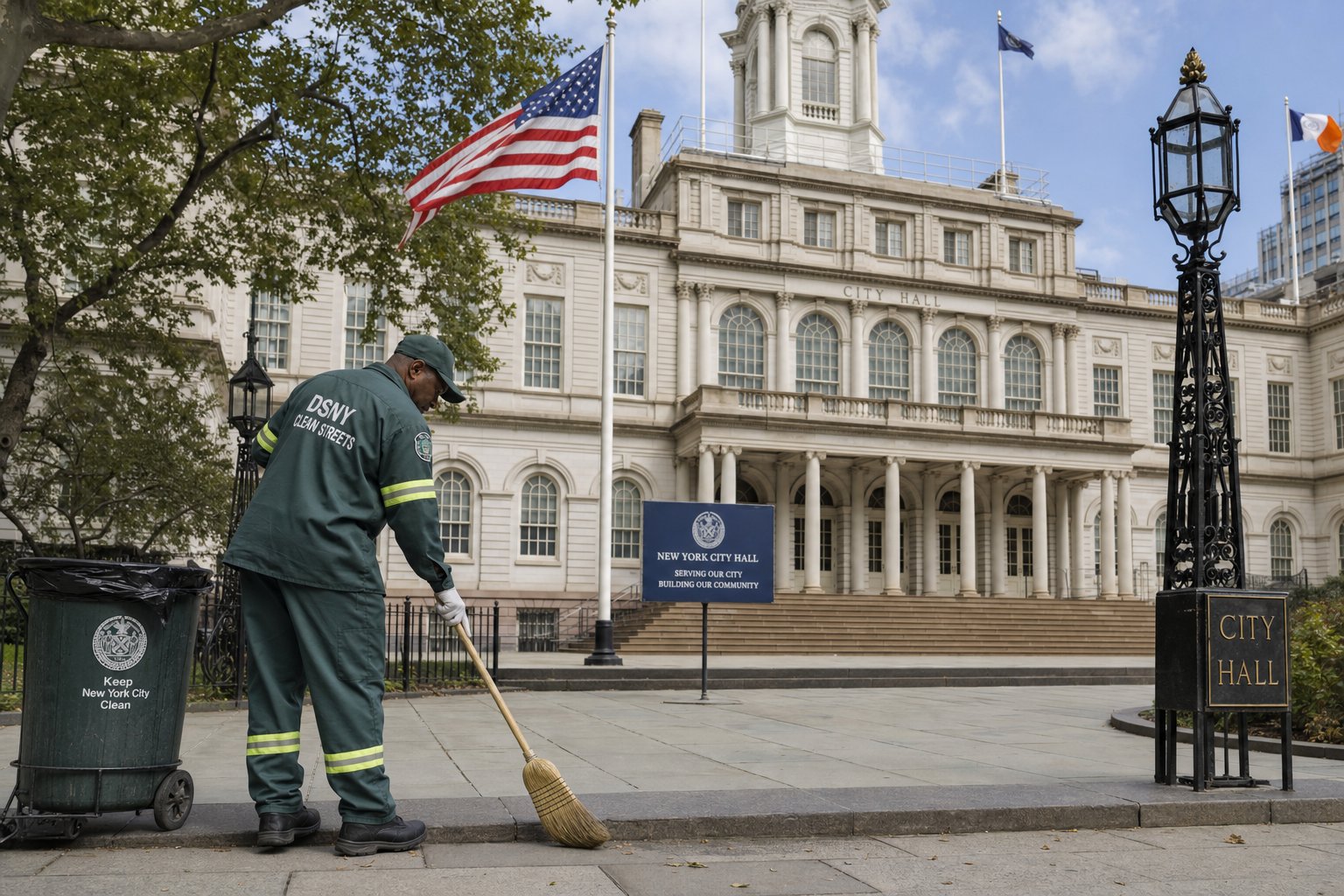
Prevailing wage can turn a “normal” cleaning bid into a compliance project. In NYC, certain publicly-funded work and specific contract structures require contractors to pay wage and benefit levels set by law and updated by the NYC Comptroller. If you are budgeting a janitorial contract for 2026—especially for a government building, publicly-funded project, or a building with requirements tied to public incentives—you need to know when prevailing wage triggers, how it changes pricing, and what documentation your vendor should provide. GreenPoint Maintenance Services supports compliance-driven cleaning scopes across NYC and the tri-state; call 844-814-0810 for a walkthrough and fixed-price proposal.
What “prevailing wage” means for cleaning contracts in NYC
Prevailing wage is a labor standard that sets minimum pay and benefit levels for covered work, often on publicly-funded projects. The intent is to prevent underbidding by cutting wages and to ensure workers on covered projects are paid consistent rates. For facility managers, the practical takeaway is that a compliant vendor must price labor differently and must maintain documentation that can withstand audits.
In janitorial procurement, prevailing wage often shows up when the owner is a public agency, the funding has public components, or the building is tied to programs that create labor requirements. If you are unsure, the safest step is to treat it as a procurement risk: ask your counsel or procurement team whether the project is covered, and require bidders to state their compliance approach in writing.
Common triggers: publicly-funded work, agencies, and covered project structures
While specifics depend on the contracting entity and the rules attached to the project, prevailing wage most commonly appears in NYC when work is performed for a government entity or on publicly-funded construction and related services. Cleaning can be part of that ecosystem—especially when the scope is tied to a public facility or when the contract language explicitly references prevailing wage requirements.
From a practical standpoint, ask three questions early: (1) Who is the contracting party (agency, authority, publicly-funded owner)? (2) Does the solicitation or contract reference prevailing wage, wage schedules, certified payroll, or labor law compliance reporting? (3) Are there audits, site access requirements, or background checks typical of government work? If yes, plan for prevailing-wage pricing and documentation. GreenPoint can review the scope and help you build a compliant service plan during a walkthrough at 844-814-0810.
How prevailing wage changes your 2026 cleaning budget
The biggest budget shift is that the wage floor is not negotiable, so the bid becomes about efficiency, scope design, and management systems. Expect compliant bids to cluster closer together on base labor cost, with differences driven by supervision levels, verification, and what is included (supplies, floor care, day porter coverage). If one bid is dramatically lower, it may be missing compliance costs or cutting scope in ways that show up later as change orders.
Prevailing wage also makes turnover and staffing reliability more visible. In a compliant environment, the winning vendor is often the one that can recruit, train, and retain staff while still meeting performance expectations. If you want to see why retention and staffing stability matter financially, read: [Janitorial Employee Turnover Impact](/blog/janitorial-employee-turnover-impact/). GreenPoint’s 98% client retention is built on stable operations and proof-driven QA.
Documentation and audit readiness: what a compliant vendor should provide
On covered work, documentation is not optional. Your vendor may need to provide certified payroll reports, wage determinations, proof of fringe benefits, and compliance attestations. As the facility manager, your risk is not just paying more—it is being caught in a dispute if a vendor underpays workers or fails an audit. The cleanest way to reduce risk is to require documentation as part of procurement and to include clear contract language about compliance responsibilities.
Operational proof helps too. GreenPoint uses StockPoint verification (timestamped, GPS-tagged photos, plus optional ATP testing) so performance is documented alongside compliance paperwork. That matters on government sites where service interruptions create immediate stakeholder pressure. If you are building a QA program into your RFP, see: [Quality Assurance Commercial Cleaning Program](/blog/quality-assurance-commercial-cleaning-program/).
NYC-specific realities: access rules, security, and “no surprises” scheduling
Government and publicly-funded sites often add constraints that private offices don’t have: sign-in procedures, restricted loading docks, freight elevator windows, background checks, and strict after-hours policies. In Manhattan, that might mean coordinating around Midtown transit peaks near Penn Station or Grand Central; in Downtown Brooklyn, it may mean staging around Jay St–MetroTech and court schedules. A compliant vendor must plan staffing and supervision to meet these realities without running up overtime or missing service windows.
GreenPoint plans these sites with a “no surprises” model: fixed pricing, defined service windows, and escalation paths for access issues. For NYC DOE-adjacent work, vendor approvals and compliance expectations can be strict; see our related NYC school guidance: [School Cleaning: NYC DOE Approved Vendor](/blog/school-cleaning-nyc-doe-approved-vendor/).
How GreenPoint bids and operates on compliance-driven contracts
GreenPoint Maintenance Services is MBE/MWBE certified (NYS, NYC, and NYC DOE) and SAM.gov registered, which supports participation in public procurement workflows. Our approach is evidence-based: clear scope definitions, fixed pricing (no hourly billing), and verification through StockPoint. For facility managers, that means fewer disputes—because you can see what was done, when, and where.
We also align work practices to safety expectations and documentation norms, including OSHA-aware chemical handling and staff training. If your contract includes chemical storage or labeling requirements, our safety framework is detailed here: [Fire Code Cleaning Chemical Storage](/blog/fire-code-cleaning-chemical-storage/) and [OSHA Cleaning Chemical Safety: GHS + SDS Explained](/blog/osha-cleaning-chemical-safety-ghs-sds/). To discuss your 2026 bid, call 844-814-0810 or email info@greenpointms.com.
Bid checklist: how to compare vendors without getting burned
To compare bids, force clarity. Require each bidder to list: covered labor assumptions, supervision ratios, what is included (supplies, floor care, porters), the documentation they will provide, and their change-order policy. Ask how they verify attendance and task completion. And ask what happens when access issues occur—because government sites often have unexpected restrictions.
If you want a model set of procurement questions, use: [Questions to Ask a Commercial Cleaning Company](/blog/questions-to-ask-commercial-cleaning-company/). GreenPoint will walk your site, confirm the compliance triggers you suspect, and build a fixed-price scope that stands up to audits and daily reality.
If you’re budgeting a prevailing-wage cleaning contract in NYC for 2026, schedule a walkthrough with GreenPoint Maintenance Services. Call 844-814-0810 or email info@greenpointms.com for a fixed-price proposal built around compliance documentation and proof-driven QA. Our StockPoint system provides timestamped GPS-tagged photos (and optional ATP testing) so you can manage performance with evidence—not guesswork.