Pharmaceutical office cleaning in the Tri-State Area sits between a corporate workplace and a regulated operating environment. A commercial office attached to a New Jersey distribution site, a Manhattan medical-affairs floor, and a Westchester pharmaceutical headquarters may share reception, conference rooms, kitchens, and restrooms while keeping samples, records, and controlled areas off limits. GreenPoint Maintenance Services creates a documented zone plan, uses JaniTrack verification, and applies Green Seal certified products where approved. Call GreenPoint at 347-332-9348 to schedule a walkthrough and receive fixed pricing with no hourly billing or hidden fees.
Why pharmaceutical offices need more than appearance cleaning
A pharmaceutical office may not be a manufacturing cleanroom, but it still supports regulated decisions, confidential information, samples, quality teams, and visitors. The cleaning scope should distinguish public and administrative areas from sample rooms, archive rooms, quality-control support, and any GMP or controlled zone. GreenPoint interviews facilities, quality, EHS, and office leadership so the route respects room classifications, badge access, documentation rules, and the boundary between janitorial service and specialized process cleaning.
The goal is a clean, consistent, reviewable environment. ISSA’s cleanability concepts help separate visible appearance from measurable soil removal, while OSHA’s laboratory and chemical-safety guidance helps define worker protections. GreenPoint writes acceptance criteria such as no visible soil, dry floors, stocked dispensers, removed waste, and completed supervisor checks. The scope also names exceptions, because a cleaner should stop when a container, sample, or spill is not clearly within the approved routine.
Tri-State access, transit, and site conditions
Location changes the route. An office near Grand Central may have strict freight-elevator windows; a Jersey City site near PATH may see a large morning arrival surge; a campus in Westchester or Connecticut may spread service across several buildings. GreenPoint’s walkthrough records loading areas, security checks, badge requirements, quiet hours, waste staging, and emergency contacts. Those details protect the service window and reduce the chance that a crew arrives but cannot reach the assigned zone.
Seasonal soil affects front-of-house areas even when the controlled work is indoors. Salt from sidewalks near Penn Station, construction dust around Hudson Square, and rain tracked through a suburban campus lobby can overwhelm entry mats and vestibules. GreenPoint can add a daytime inspection or targeted entrance route without pretending that every room needs the same frequency. Call 347-332-9348 to update the scope when headcount, visitors, or a lease footprint changes.
A practical zone map for pharma offices
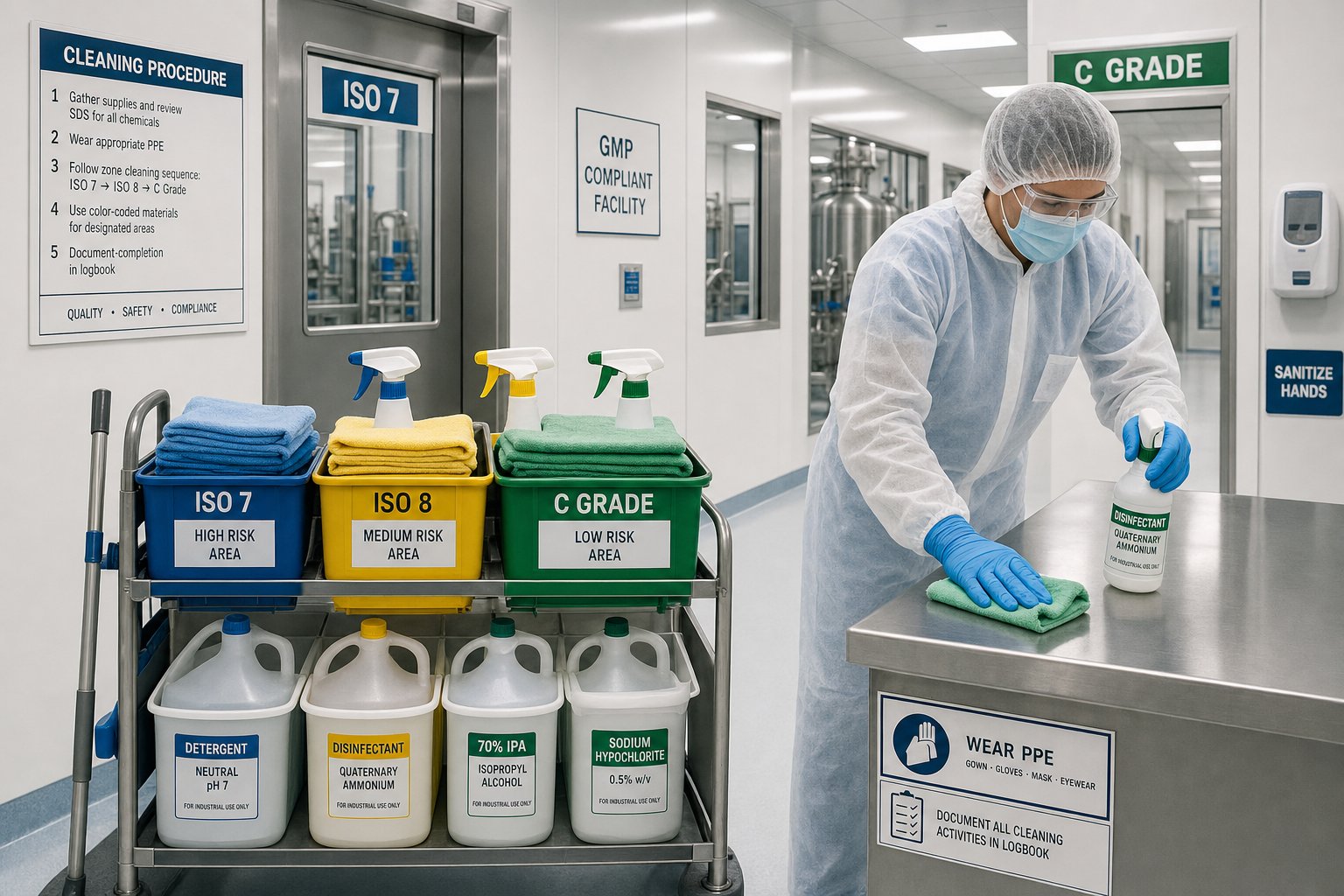
A usable zone map names reception, visitor seating, conference rooms, open offices, executive areas, kitchens, restrooms, corridors, stairwells, sample-adjacent spaces, records rooms, and loading paths. It should also show prohibited rooms, approved entry times, and where supplies may be staged. GreenPoint uses color-coded microfiber and dedicated equipment so a restroom tool does not enter a pantry or a restricted support area. The supervisor reviews the map with the client before the first recurring service.
Frequency can then follow use and risk. Common areas and restrooms may need daily service; occupied kitchens may need a second check; executive or low-traffic offices may be nightly or scheduled; high dusting and floor restoration may be monthly or quarterly. The [cleaning frequency standards by facility type](/blog/cleaning-frequency-standards-by-facility-type/) guide gives a useful baseline. GreenPoint adjusts it to the site’s SOPs, visitor calendar, and audit expectations rather than using a generic calendar.
Documentation that supports audit readiness
Audit readiness begins with a record that is complete and retrievable. JaniTrack can capture task completion, timestamps, GPS-tagged photos of approved areas, notes, and exceptions. GreenPoint configures the record around the client’s privacy and quality rules so photos do not reveal labels, screens, patient information, or confidential documents. A manager can review whether a restroom check, conference-room reset, or support-corridor task occurred within the defined window.
Documentation only has value if it drives correction. If a recurring high-touch point shows higher ATP readings, GreenPoint can review dwell time, product choice, or frequency with the client. If a supervisor finds a missed periodic task, the route can be corrected and the action recorded. JaniTrack is not a GMP validation record or a laboratory result; it is operational evidence that complements the client’s quality system. Review [digital cleaning verification systems](/blog/digital-cleaning-verification-systems/) for the broader workflow.
Chemical safety and approved products
Every pharmaceutical site should maintain an approved-product list and a process for changing products. GreenPoint follows the label for dilution, contact time, PPE, ventilation, and re-entry, and uses Green Seal certified products in suitable office zones when the client approves them. The [EPA disinfectant registration guide](/blog/epa-disinfectant-registration-guide/) explains why registration and label claims matter. A green label is not a license to use a product outside its intended surface or organism claim.
OSHA’s [Hazard Communication Standard](https://www.osha.gov/hazcom) calls for accessible SDS information, labels, and employee training. GreenPoint stores and transports chemicals according to the site’s rules, separates incompatible products, and escalates damaged or unlabeled containers. Facility managers should ask who owns SDS updates, how a spill is reported, and how after-hours staff are protected. Call 347-332-9348 to include those controls in the written walkthrough scope.
Privacy, records, and sensitive office areas
Pharmaceutical offices often contain clinical-trial information, vendor pricing, employee records, and unreleased research. A janitorial scope should prohibit opening drawers, reading papers, moving samples, or photographing screens. GreenPoint trains staff to clean around approved surfaces, report unattended sensitive material, and use JaniTrack only in approved locations. The client’s privacy rules should be reviewed before any photo-based verification begins.
A simple room-access matrix helps: public, employee-only, escorted, restricted, and no-entry without written release. GreenPoint’s supervisor can confirm which doors remain locked, where waste is placed, and which conference rooms require a reset only after the booking ends. This discipline protects the client while keeping the route practical. For questions to use in vendor interviews, see [questions to ask a commercial cleaning company](/blog/questions-to-ask-commercial-cleaning-company/).
Cost benchmarks and contract structure
A pharmaceutical office quote should account for square footage, room count, access time, security, controlled-area entry, documentation, consumables, periodic floor work, and supervisor coverage. A 25,000-square-foot headquarters with two kitchens and a visitor center can require more daytime support than a larger low-traffic administrative floor. The [commercial cleaning cost per square foot](/blog/commercial-cleaning-cost-per-square-foot/) article is a starting point, but a floor plan is necessary for a defensible price.
GreenPoint uses fixed monthly pricing, no hourly billing, and no hidden fees, with optional work listed separately. Procurement teams can also review MBE/MWBE certifications in New York programs, SAM.gov registration, insurance, training, and a 98% client-retention record. The company serves NY, NJ, CT, PA, and FL, so portfolio clients can align standards while still receiving local access planning. Call 347-332-9348 for a written proposal.
How to choose a pharmaceutical cleaning partner
Ask the vendor to demonstrate how it handles restricted rooms, approved chemicals, worker absences, photo privacy, missed tasks, and an unknown spill. Request a sample checklist that includes acceptance criteria rather than only a list of rooms. GreenPoint provides a named supervisor, documented route, escalation process, and JaniTrack dashboard so a quality or facilities manager can review performance without hunting through paper logs.
The right provider will respect the difference between a corporate office and a GMP-controlled operation. Start with [how to choose a commercial cleaning company](/blog/how-to-choose-commercial-cleaning-company/) and invite facilities, quality, and EHS to the walkthrough. GreenPoint can schedule a site review through 347-332-9348 or info@greenpointms.com and return a fixed-price scope that shows exactly what is included.
A launch meeting should include a facilities lead, quality representative, security contact, and the GreenPoint supervisor. Together they can confirm restricted-room rules, photo permissions, approved products, waste staging, visitor events, and the escalation number for an after-hours issue. This five-person handoff often prevents more disruption than a longer checklist because it resolves who owns each decision before the first shift begins.
Review the program on a fixed cadence rather than only after a complaint. GreenPoint can summarize completed tasks, exceptions, response times, and recurring touchpoint findings from JaniTrack, then propose one or two scoped improvements. If a team grows, a new conference center opens, or a quality group changes its access window, the written price and route can be updated together. The result is an office program that remains audit-ready as the business changes.
The service review should include consumables, equipment condition, and seasonal planning. A facility can avoid a preventable interruption by confirming that liners, soap, paper products, microfiber, and approved chemicals are available before a large visitor event or winter storm. GreenPoint documents these assumptions in the proposal and flags a change before it becomes a missed task.
Frequently asked questions
Does pharmaceutical office cleaning require GMP documentation? It depends on the areas and the client’s quality system. GreenPoint documents the janitorial tasks it is assigned, while the client retains control of GMP validation, environmental monitoring, process cleaning, and any quality records defined by its procedures.
Can JaniTrack photos include samples or documents? No. GreenPoint configures approved photo zones and privacy rules to avoid samples, labels, screens, records, patient information, and confidential work. JaniTrack can still show timestamps, GPS-tagged environmental photos, task status, notes, and exceptions.
Which products are used in a pharmaceutical office? GreenPoint follows the client’s approved-product list and each label’s dilution, dwell time, PPE, ventilation, and re-entry instructions. Green Seal certified products may be used in suitable office areas when approved; certification does not override a site SOP.
How often should pharma offices be cleaned? Common areas, kitchens, and restrooms are often daily or more frequent; offices and controlled support zones follow traffic, risk, and SOP requirements. GreenPoint sets the cadence after a walkthrough and records it in the fixed-price scope.
How can I schedule a Tri-State quote? Call GreenPoint at 347-332-9348 or email info@greenpointms.com. Include the site address, approximate square footage, operating hours, restricted areas, and desired start date so the walkthrough can be prepared.
Make audit readiness practical: call GreenPoint Maintenance Services at 347-332-9348 for a Tri-State walkthrough and fixed-price pharma office cleaning quote. GreenPoint delivers documented routes with JaniTrack and retains 98% of clients.