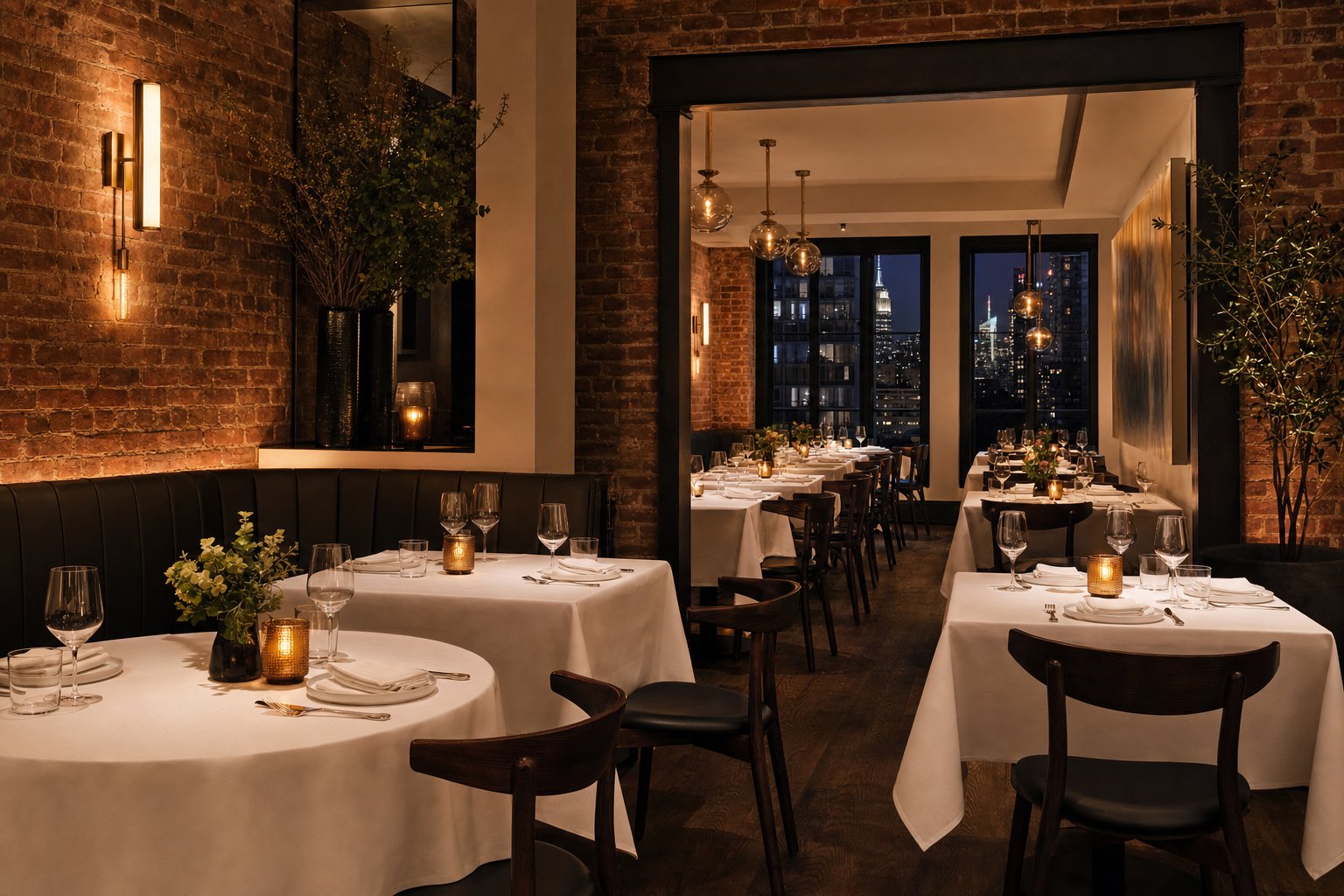
In NYC, restaurant cleaning is not just about appearance—it’s about passing inspections, reducing fire risk, and protecting your brand in a market where one bad review can spread fast. From Midtown lunch rush spots to Brooklyn neighborhood restaurants and Queens takeout-focused kitchens, operators deal with grease buildup, high-touch restrooms, and tight overnight windows for cleaning. GreenPoint Maintenance Services supports NYC restaurants with structured scopes, fixed pricing (no hourly surprises), and StockPoint verification (timestamped, GPS-tagged photos and checklists). Call 844-814-0810 to schedule a walkthrough and build a cleaning plan aligned with FDNY realities and health expectations.
FOH vs BOH: define zones so the scope doesn’t fall apart
Restaurants are two facilities in one: front-of-house (FOH) where guests judge you, and back-of-house (BOH) where grease, moisture, and food soils drive risk. Cleaning programs fail when the scope is vague about who owns which zone—especially around shared corridors, storage, and dish areas. GreenPoint maps FOH and BOH zones during the walkthrough and sets task frequencies accordingly: FOH floors, tables, and restrooms daily; BOH degreasing routines nightly; and deeper detailing on a weekly or monthly cycle. If you’re setting frequencies formally, use [cleaning frequency standards by facility type](/blog/cleaning-frequency-standards-by-facility-type/).
Nightly closeout cleaning: the minimum viable routine
A strong closeout routine prevents pests, odors, and next-day chaos. At minimum, nightly closeout should include: removal of food waste and trash to designated areas, wipe-down and sanitation of FOH touchpoints, restroom reset (fixtures, floors, replenishment), BOH floor degreasing in traffic lanes, and spot detailing of splash zones near prep and dish areas. The goal is to start the next shift with a stable baseline rather than playing catch-up. GreenPoint can document closeout completion via StockPoint for operators managing multiple locations.
FDNY and fire-risk realities: grease buildup is the real enemy
Restaurant fires are often linked to grease accumulation in hoods, ducts, and cooking areas. While hood and duct service is typically performed by specialized vendors, daily and weekly degreasing in surrounding areas (walls, equipment exteriors, floors) reduces risk and improves air quality. GreenPoint coordinates with your hood-cleaning schedule so janitorial work supports, rather than conflicts with, fire-safety objectives. Proper chemical storage also matters; restaurants often store degreasers and aerosols, which should align with building fire code and safety practices. For a safety overview, reference [fire code cleaning chemical storage](/blog/fire-code-cleaning-chemical-storage/) and [OSHA cleaning chemical safety (GHS/SDS)](/blog/osha-cleaning-chemical-safety-ghs-sds/).
Grease traps and floor drains: coordination beats last-minute emergencies
Grease trap service and drain maintenance are operational necessities that often get ignored until there’s an odor, backup, or violation. GreenPoint’s role is to keep surrounding areas clean and coordinate access windows with your grease trap vendor so the space is service-ready and hygienic afterward. This includes degreasing around the trap location, cleaning splash zones, and resetting floors. A coordinated plan reduces downtime and helps you avoid the "surprise" emergency service calls that hit budgets hardest. Call 844-814-0810 to discuss a coordinated schedule during your walkthrough.
Restrooms in NYC restaurants: high-traffic standards and inspection readiness
Restrooms are where guests decide if your operation is "clean" overall. In NYC, high-traffic restrooms need daily deep attention plus touch-ups during service, especially in neighborhoods with heavy foot traffic like Times Square, the West Village, Williamsburg, or Downtown Brooklyn. GreenPoint uses measurable restroom checklists and verifies completion via photos where appropriate. For technique standards, see [restroom cleaning best practices for high traffic](/blog/restroom-cleaning-best-practices-high-traffic/).
Choosing the right disinfectants: EPA registration and correct contact time
Disinfection fails when products are chosen casually or used incorrectly. GreenPoint uses EPA-registered disinfectants as needed and follows label directions for dwell/contact time, dilution, and surface compatibility. This is especially important on high-touch FOH areas, restroom touchpoints, and staff areas. If you need a primer for your management team, start with [EPA disinfectant registration guide](/blog/epa-disinfectant-registration-guide/).
Proof-based cleaning for multi-unit operators: StockPoint verification
If you manage more than one location, your biggest issue is consistency. GreenPoint’s StockPoint verification supports timestamped photos, checklists, and a live dashboard so you can confirm service was completed at each site and identify recurring issues early. We can also add ATP testing for selected touchpoints to validate cleaning effectiveness in high-risk zones. To understand ATP measurement, read [what is ATP bioluminescence testing in cleaning](/blog/what-is-atp-bioluminescence-testing-cleaning/).
Local NYC details: late-night schedules, trash rules, and transit corridor grime
NYC restaurants often operate late, and cleaning windows can start after midnight. That creates constraints around noise, elevator access, and trash handling. Neighborhood trash rules and building policies also affect when waste can be staged and removed. GreenPoint plans work around these constraints and focuses on entryway soil control—especially near subway-adjacent storefronts where grit and moisture track in continuously. This is a major issue along high-traffic corridors near Penn Station, Grand Central, and major transfer points in Brooklyn and Queens.
DOHMH letter grade inspections: what cleaning affects your score
New York City's DOHMH letter grade inspection is the single most public-facing cleanliness signal your restaurant has. An A in the window drives foot traffic. A B or C posted publicly costs measurable revenue. Roughly 40% of DOHMH inspection points relate directly to cleaning: food contact surface sanitation (up to 7 points per violation), non-food contact surfaces (2-5 points), floors and walls (2 points), plumbing area cleanliness (2-7 points), and evidence of pests, which is heavily tied to sanitation gaps.
GreenPoint Maintenance Services builds its restaurant cleaning scopes around DOHMH's exact inspection criteria, not generic "back-of-house cleaning." That means documented cleaning of walk-in refrigeration exteriors, coving inspection at floor/wall junctions, ceiling tile cleaning near hood exhaust, and dumpster area sanitation. Every cycle is timestamped through StockPoint, giving you a defensible cleaning record if an inspector cites you on something we've been servicing on schedule.
FDNY commercial cooking exhaust standard: what your janitorial vendor CAN and CAN'T do
FDNY Rule 3 RCNY §5301-01 (the commercial cooking exhaust cleaning standard) mandates cleaning frequency for hood systems based on your cooking volume: quarterly for solid fuel, semi-annually for high-volume gas/electric, and annually for low-volume operations. FDNY-certified hood-cleaning firms (not general janitorial vendors) must perform the actual grease removal from exhaust plenums, ducts, and rooftop fans, and they issue certified reports.
GreenPoint Maintenance Services does NOT perform certified hood cleaning — instead, we coordinate with certified hood cleaning vendors your restaurant uses, schedule our cleaning around theirs, and clean around the hood system (interior kitchen walls, ceiling tile grime, wall-mount fans in cooking zones) on a much more frequent cycle. We also document these related cleaning tasks so your FDNY compliance package has full support. Call 844-814-0810 for a walkthrough that maps your FDNY hood schedule against a supporting janitorial scope.
Grease trap and floor drain treatment
Kitchen floor drains and grease traps are the biggest hidden odor and pest driver in commercial restaurant kitchens. GreenPoint applies enzymatic drain treatment on a documented cycle (typically weekly for high-volume kitchens, biweekly for lower volume) that breaks down grease and food buildup without corrosive chemistry that damages piping. We coordinate with your licensed grease trap pump vendor to time our cleaning around their service windows.
For older buildings with slow drains or backflow issues, we can identify the sanitation-related contributions during our walkthrough — but permanent fixes require plumbing work that's outside our scope. Related: [Restroom Cleaning Best Practices for High Traffic](/blog/restroom-cleaning-best-practices-high-traffic/) covers drain, tile grout, and fixture cleaning practices that apply directly to restaurant restrooms as well.
Front-of-house: dining room floors, tabletop transitions, and guest restrooms
Front-of-house cleaning is where guest perception is set. GreenPoint's overnight cleaning for restaurant dining rooms typically covers: full floor care (sweeping, mopping, and periodic deep extraction), booth and banquette wipe-down (checking gum, spills, and crumbs on the underside of seats), high dusting for ceiling-mounted décor, glass polish for windows and mirrors, and full restroom deep clean including grout scrubbing and dispenser refill. Every task is photo-verified through StockPoint, so your GM or opening manager sees exactly what happened overnight.
For restaurants using a shared building entry or vestibule (common in NYC ground-floor restaurant spaces under residential or office towers), GreenPoint coordinates with the building's cleaning schedule to avoid gaps and overlaps. We also apply salt-neutralizing floor treatment during winter to protect tile and wood floors from tracked-in NYC road salt. Call GreenPoint Maintenance Services at 844-814-0810 to schedule a walkthrough — we can typically start service within 7-10 days after contract signature.
Pest control coordination: how janitorial and IPM programs interact
Sanitation is the foundation of any effective integrated pest management (IPM) program in a restaurant. Even the best licensed pest control operator cannot compensate for grease buildup behind cooking equipment, food debris in floor cracks, or standing water in unused floor drains. GreenPoint Maintenance Services coordinates with your licensed pest control vendor on inspection findings — when your IPM operator flags a sanitation-related issue, we adjust cleaning frequency or scope to address the underlying condition, not just the symptom.
We document these coordination touch-points through StockPoint, giving both you and your pest control vendor a shared record of what was cleaned in response to which inspection finding. Call GreenPoint at 844-814-0810 to schedule a restaurant-specific walkthrough.
FAQ: restaurant cleaning in NYC
Q: Do you clean kitchens during operating hours? A: Most BOH work is best done after close, but we can structure daytime touch-ups and safety checks when needed. Call 844-814-0810 to plan coverage. Q: Do you handle hood and duct cleaning? A: Hood/duct service is usually performed by specialized vendors; GreenPoint coordinates janitorial cleaning around it and can align schedules for smoother operations. Q: Can you include floor drain detailing? A: Yes, we can include drain-area cleaning and coordinated access, especially in dish and prep areas, as part of a defined scope. Q: How do you avoid strong chemical odors in FOH? A: We select appropriate chemistry, control dilution, and time heavier work after close so odors dissipate before service. Q: What makes GreenPoint different from a cheap nightly cleaner? A: Fixed pricing, documented scope, proof-based QA with StockPoint verification, and a 98% client retention record—built for operators who need consistency.
Want an inspection-ready, FDNY-aware restaurant cleaning program with real documentation? GreenPoint Maintenance Services Corp delivers fixed pricing, structured scopes, and proof-based QA with StockPoint verification. Call 844-814-0810 or email info@greenpointms.com to schedule a walkthrough for your NYC restaurant and get a documented nightly closeout plan.